“This post was originally planned for 21st October, but I chose to share it today with a calm mind and renewed reflection. Sometimes, timing delays turn into deeper understanding — and that’s what this article carries.”
Volunteering and Women Empowerment: Making a Difference
Introduction: When Helping Hands Create Lasting Change
Volunteering and women empowerment are two forces that redefine how societies grow.
When individuals volunteer, they offer their time, skills, and empathy to uplift others. When women are empowered, entire families, communities, and nations rise.
The intersection of volunteering and women empowerment is where compassion meets transformation. Each volunteer hour becomes a seed of change—nurturing confidence, independence, and opportunity. Whether it’s teaching rural girls, mentoring women entrepreneurs, or supporting victims of violence, every act of giving creates ripples of empowerment.
This blog explores how women empowerment through volunteering strengthens social structures, drives equality, and builds communities that thrive on shared responsibility. It is about people who choose purpose over convenience and discover that when you empower a woman, you empower humanity.
Understanding the Connection Between Volunteering and Empowerment
Volunteering isn’t only about charity—it’s about shared growth. It allows individuals to contribute while learning empathy, leadership, and responsibility. For women, it creates space to step beyond traditional roles and assert their voices in society.
Women empowerment through volunteering functions as both cause and effect. Empowered women volunteer to uplift others, and through volunteering, more women find their confidence, networks, and sense of agency.
Every successful community project proves one truth: empowerment multiplies when it is shared.
The Social Impact of Volunteering
The social impact of volunteering extends far beyond the individual act. It bridges social divides, enhances civic participation, and fosters inclusion. Volunteers become catalysts of trust in communities where inequality has often created walls of silence.
In developing societies, volunteer networks support critical areas like literacy, maternal health, microfinance, and leadership development. When women are included in these initiatives—as both beneficiaries and leaders—the outcomes become sustainable.

Volunteering teaches responsibility; empowerment teaches resilience. Together, they become the backbone of meaningful activism and long-term social reform.
Women Empowerment Through Volunteering: A Two-Way Path
Empowerment doesn’t happen in isolation. It requires opportunities, exposure, and participation. Volunteering provides exactly that—an open platform to act, lead, and learn.
Through women empowerment through volunteering, women gain practical skills—communication, organization, problem-solving, teamwork, and decision-making. These translate into better employment prospects, leadership confidence, and community respect.
At the same time, when women take the lead in volunteer projects—training others, advocating rights, or initiating health drives—they model empowerment in action. Every mentoring session, every campaign, becomes proof that real change grows from within.
Volunteer Work for Women: A Catalyst for Equality
Across the world, volunteering and women empowerment are breaking long-standing cycles of dependency. From local self-help groups in India to international NGOs, programs that mobilize women as volunteers have transformed entire social and economic ecosystems.
Consider rural literacy initiatives where educated women volunteer to teach young girls. The results are tangible—higher enrollment rates, reduced dropouts, delayed child marriages, and improved community health.
When women lead volunteer programs, they embody the true spirit of volunteering and women empowerment, challenging stereotypes that confine them. They prove that compassion and competence can coexist, and that leadership has no gender.
Ultimately, volunteerism becomes a form of empowerment-driven activism—quiet, consistent, and deeply transformative.
How Volunteering Empowers Women Emotionally and Economically
The question often asked is, “How does volunteering and women empowerment work together to create change?” The answer lies in both emotional and economic dimensions.
Emotionally, volunteering and women empowerment nurture self-worth. Many women who once doubted their abilities discover inner strength through service. Helping others heals self-doubt, while teamwork replaces isolation with a sense of belonging.
Economically, volunteering opens doors to professional networks, training opportunities, and micro-enterprise exposure. Women who begin as volunteers often transition into paid roles or evolve as social entrepreneurs. Their experience adds credibility and skill—two of the most valuable currencies in today’s job market.
In this sense, volunteering and women empowerment are not just about giving; they’re about awakening potential—helping women recognize their influence, independence, and capacity to shape a better world.
Community Development and Women: Shared Leadership for Progress
Communities flourish when women are active participants. Community development and women go hand in hand because women naturally prioritize inclusive growth—health, education, safety, and harmony.
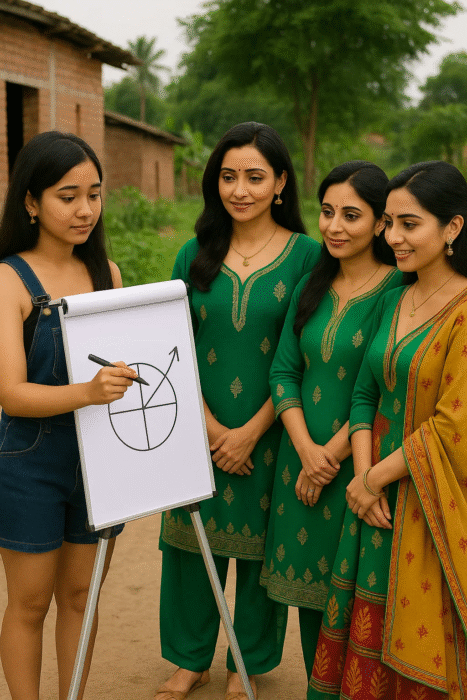
When volunteer projects integrate women’s voices in planning and execution, they mirror the needs of the whole community. For instance, women volunteers in rural health missions have reduced infant mortality and improved sanitation awareness.
Volunteering also strengthens local democracy. Women who engage in civic actions—cleanliness drives, awareness campaigns, or microfinance committees—become informed citizens and role models for others.
True community development and women empowerment happen together; neither can exist in isolation.
Volunteering and Women Empowerment in India
India provides vivid examples of how volunteering fuels empowerment.
- SEWA (Self-Employed Women’s Association) mobilizes women workers into cooperatives, combining volunteerism with economic independence.
- Anganwadi and ASHA workers—most of them women volunteers—drive health, nutrition, and early education across villages.
- Numerous NGOs like Pratham, Goonj, and Smile Foundation rely on women volunteers for literacy and livelihood missions.
These initiatives show that empowering one woman volunteer often uplifts dozens of others. Rural women trained as volunteers not only change their households but also influence local governance and economic decisions.
The Global Picture: Women Leading Through Service
Globally, women volunteers have been at the frontlines of crises—from disaster relief to refugee rehabilitation. In Africa, community mothers run agricultural collectives; in Europe, women lead refugee integration programs; in Asia, they champion digital literacy.
Such volunteer work for women highlights the power of compassion in action. Studies by the United Nations show that when women volunteer, community trust and participation rates increase dramatically.
Volunteering therefore acts as a bridge between policy and people, ensuring that empowerment is not theoretical but lived every day.
Social Impact & Activism: From Awareness to Action
Your category focus, Social Impact & Activism, is where the connection between Volunteering and Women Empowerment shines brightest.
Activism gives voice to causes; volunteering gives them hands and hearts. Campaigns for gender equality often begin as volunteer movements—individuals teaching, counselling, or mentoring. Over time, these grassroots actions evolve into national reforms.
For example, movements against domestic violence, menstrual stigma, or trafficking gained momentum because volunteers kept communities engaged long after protests ended. Their steady commitment transformed activism into sustainable impact.
Through Volunteering and Women Empowerment, activism gains continuity—and empowerment gains community. Together, they create a living cycle of compassion, leadership, and long-term social change.
The Ripple Effect: Empowering Families and Future Generations
An empowered woman influences everyone around her. When women volunteer, they teach empathy to children, inspire partners to share responsibility, and motivate neighbors to contribute.
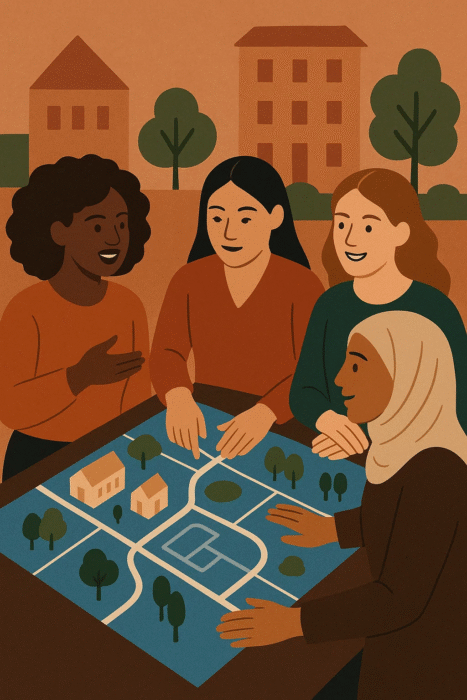
This ripple effect ensures that empowerment isn’t confined to workshops or reports—it becomes a way of life. Children raised by mothers active in volunteer work for women grow up seeing equality as normal. Sons learn respect; daughters learn confidence.
This cultural shift is the most lasting form of social transformation.
Barriers Women Face in Volunteering
Despite its power, volunteering isn’t equally accessible to all women.
Common barriers include:
- Lack of childcare and family support.
- Safety concerns in public spaces.
- Societal expectations that limit women’s mobility.
- Unpaid nature of volunteer work discouraging participation.
Addressing these challenges requires policy support—stipends, flexible hours, digital volunteering platforms, and recognition programs. When volunteering becomes inclusive, its empowerment potential multiplies.
Case Study: Digital Volunteering and Women Empowerment in 2025
The digital revolution has transformed the landscape of Volunteering and Women Empowerment.
Online mentorship, virtual fundraising, and remote teaching now allow women to contribute meaningfully without physical or social barriers.
In 2025, thousands of Indian women are engaging on digital volunteering platforms to mentor students, assist NGOs, and raise awareness about health and the environment. These opportunities help them master technology, leadership, and communication—skills essential for personal growth and future employment.
Through global connections, digital volunteering strengthens Volunteering and Women Empowerment, building solidarity networks where shared experiences turn into collective strength and lasting transformation.
Volunteering, Mental Health, and Self-Worth
Volunteering is therapy in disguise. Many women recovering from personal loss, trauma, or career breaks find healing through service.
Helping others triggers dopamine and serotonin—the brain’s happiness chemicals—reducing anxiety and loneliness. For women who often juggle multiple responsibilities, volunteering offers purpose beyond routine.
Thus, empowerment is not only external (financial or social) but also internal—emotional balance, clarity, and confidence.
From Volunteerism to Leadership: Building Social Capital
Many women who start as volunteers eventually become community leaders, trainers, or founders of NGOs.
This journey from volunteering and women empowerment to leadership represents the creation of social capital—trust, collaboration, and innovation.
Such leaders inspire new generations to step forward, creating self-sustaining ecosystems of growth.
Leadership built on service is inclusive, empathetic, and grounded—exactly what modern activism needs.
The Role of Men in Volunteering for Women Empowerment
Empowerment must be inclusive. Men who volunteer for women’s causes challenge stereotypes and model equality.
When fathers mentor girls, male teachers advocate equal classrooms, or male entrepreneurs sponsor women’s training programs, they accelerate change.
Such collaborations reinforce that community development and women empowerment are shared goals, not gendered agendas.
True equality grows when support replaces superiority.
Measuring the Social Impact of Volunteering
Quantifying the social impact of volunteering is essential to show its value. Key indicators include:
- Increase in women’s participation in local governance.
- Rise in literacy and employment rates.
- Reduction in gender-based violence.
- Enhanced access to healthcare and digital literacy.
Each of these outcomes begins with one consistent effort: volunteers showing up, week after week, to make a difference.
How Organizations Can Promote Volunteering for Women Empowerment
Governments, corporations, and NGOs can strengthen this movement through:
- Corporate Volunteering Programs: Encouraging employees to mentor women entrepreneurs or teach digital skills.
- University Initiatives: Including service learning in academic credits.
- Public Recognition: Awards and media coverage to celebrate volunteers.
- Collaborations: Partnerships between women’s groups and community organizations.
When institutions value volunteerism, empowerment becomes systemic, not seasonal.
The Spiritual Dimension of Empowerment Through Service
Every act of volunteering is also an act of self-growth. It aligns with the Indian philosophy of Seva—selfless service.
Through volunteering, women find purpose; through empowerment, they find freedom. Together, they create harmony between giving and receiving, effort and gratitude.
This spiritual connection ensures that activism remains compassionate, not confrontational.
Future of Volunteering and Women Empowerment
Looking ahead, the synergy between volunteering and empowerment will only deepen. Artificial Intelligence, digital literacy, and online learning will enable more women to contribute globally.
Hybrid volunteer models—combining on-ground work with digital advocacy—will become the norm.
What remains timeless is the human spirit—the willingness to serve and the courage to lead.
The next decade will witness empowered volunteers leading climate action, mental health awareness, and social justice campaigns. The future of volunteering and women empowerment is not a vision; it’s a movement already in motion.
Conclusion: Making a Difference, One Act at a Time
Volunteering and women empowerment are not separate missions—they are intertwined threads of progress.
Volunteering teaches empathy, while empowerment sustains it. Together, they redefine activism as everyday action.
When a woman volunteers, she not only uplifts others but also transforms herself—her voice becomes stronger, her purpose clearer.
Every smile she creates, every hand she holds, becomes a step toward equality and compassion.
Let us recognize and support every volunteer who contributes to community development and women empowerment—because through their kindness, society finds its strength.
When service meets empowerment, we don’t just make a difference—we create a legacy of hope.
Leave a Reply