Women Empowerment Series III (Part 1/10)
Cultural & Global Perspectives
Introduction: Why Culture Shapes Women Empowerment
Empowerment is not a uniform concept across the world. What progress looks like in one society may differ significantly in another. Women empowerment in different cultures is shaped by history, religion, economics, politics, and deeply rooted traditions. Cultural values influence gender roles in different cultures, determining expectations around education, work, leadership, and family life.
In some societies, empowerment is measured through economic independence and political leadership. In others, it is reflected in community influence and social respect. Understanding women empowerment in different cultures requires comparative analysis rather than assumption. A global perspective prevents cultural bias and highlights diverse paths toward dignity and opportunity.
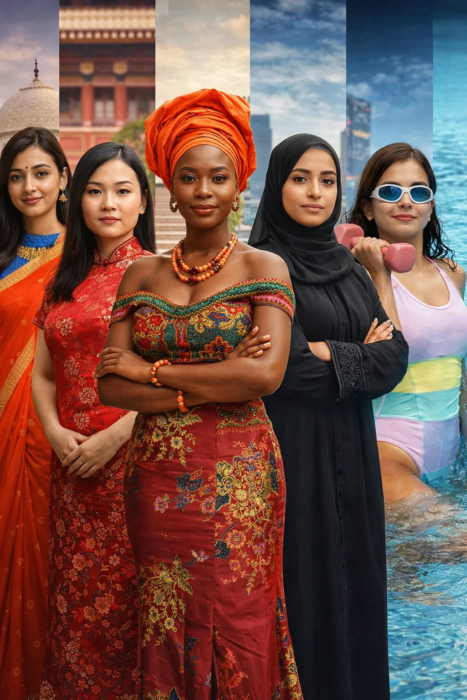
As global women empowerment gains momentum, conversations increasingly cross borders. Women empowerment worldwide is influenced by digital communication, international law, and shared advocacy movements. Yet local traditions continue to shape lived realities. Studying women empowerment in different cultures helps us appreciate both differences and shared aspirations — creating space for informed dialogue rather than simplistic comparisons.
Defining Women Empowerment in a Global Context
Before comparing societies, it is essential to define what empowerment means. Women empowerment in different cultures includes economic participation, political representation, social mobility, access to education, healthcare, and leadership opportunities. It is both structural and personal.
Globally, empowerment operates on three key levels: economic, political, and social. Economically, it means fair wages, entrepreneurship opportunities, and financial independence. Politically, it includes representation in governance and policymaking. Socially, it involves freedom from discrimination and violence.
However, there is a difference between legal equality and lived equality. Many nations have constitutional guarantees of women’s rights across cultures, yet implementation gaps remain. Laws may exist, but social norms can restrict practical freedom.
Women empowerment in different cultures therefore requires evaluating both legal frameworks and everyday experiences. From urban corporate environments to rural communities, empowerment takes multiple forms. A comparative approach highlights how cultural perspectives on women influence whether equality is symbolic or substantive.
Historical Influence on Gender Roles in Different Cultures
To understand women empowerment in different cultures, history must be considered. Traditional societies often assigned clearly defined gender roles in different cultures, rooted in agricultural economies and kinship systems. In many communities, women contributed significantly to household economies but lacked formal recognition.
Colonial influences reshaped local gender dynamics in numerous regions. Western legal systems introduced new education models and labour structures, sometimes disrupting indigenous systems that had previously allowed greater autonomy for women.
Religious frameworks have also shaped cultural perspectives on women. Interpretations of religious texts influenced dress codes, inheritance laws, and leadership participation. Industrialization further transformed gender roles in different cultures by moving labour from homes to factories and offices.
These historical factors explain why women empowerment in different cultures evolved differently. Some societies embraced rapid reform, while others maintained traditional structures longer. Understanding history prevents oversimplification and encourages balanced analysis in discussions of global women empowerment.
Women Empowerment in Western Societies
In many Western countries, women empowerment in different cultures often emphasizes individual rights and workplace equality. Feminism in different countries such as the United States, France, and Germany has focused on equal pay, reproductive rights, and representation in politics.
Political participation is a visible indicator. Women hold significant positions in parliaments and corporate boards across Europe and North America. Anti-discrimination laws protect employment rights, and gender quotas in some nations encourage representation.
However, challenges remain. Wage gaps persist, and work-life balance debates continue. Women empowerment worldwide discussions often highlight Western societies as leaders, yet internal inequalities still exist across race, class, and immigration status.
Cultural perspectives on women in these societies increasingly prioritize autonomy and choice. Yet the emphasis on individualism differs from more collective cultural contexts elsewhere. Studying women empowerment in different cultures reveals that even progressive systems face structural challenges alongside achievements.
Women Empowerment in Asian Cultures
Women empowerment in different cultures across Asia presents a diverse picture. Rapid economic transformation in countries such as India, China, Japan, and South Korea has expanded educational access and workforce participation. Literacy rates and higher education enrolment among women have increased significantly.
At the same time, many Asian societies maintain family-centred structures. Cultural respect for elders and traditional roles influences expectations around caregiving and marriage. Gender roles in different cultures across Asia often balance modern professional aspirations with traditional responsibilities.
In several nations, women lead corporations and political institutions, demonstrating strong global women empowerment progress. Yet structural limitations remain, including workplace discrimination and unequal domestic labour distribution.
Cultural perspectives on women in Asia highlight both resilience and complexity. Women empowerment in different cultures here cannot be evaluated solely through Western standards; it must consider collective values and social harmony alongside individual achievement.
Women Empowerment in Middle Eastern and African Cultures
Women empowerment in different cultures across the Middle East and Africa reflects a mix of tradition and reform. Legal reforms in countries such as the UAE, Saudi Arabia, Rwanda, and South Africa have expanded educational access and political representation.
In Rwanda, for example, women hold a high percentage of parliamentary seats. In parts of the Middle East, recent reforms have increased workforce participation. These developments demonstrate progress in global women empowerment.
However, cultural traditions continue to shape daily experiences. Cultural barriers to women empowerment often include limited mobility, economic dependence, and restrictive social norms. Gradual policy shifts aim to address these challenges while balancing tradition.
Women empowerment in different cultures within these regions must be understood contextually. Change is often incremental rather than sudden. Women empowerment worldwide efforts increasingly collaborate with local leaders to promote sustainable reform rather than imposing external models.
Women Empowerment in Indigenous and Tribal Cultures
Indigenous and tribal societies offer unique insights into women empowerment in different cultures. In some regions, matriarchal systems grant women significant authority in land ownership and community decisions. Leadership is often collective rather than hierarchical.
Cultural perspectives on women in these societies may differ sharply from mainstream national systems. For example, certain African and Asian tribal communities recognize women as custodians of cultural traditions and natural resources.
However, modernization and land disputes sometimes undermine traditional autonomy. Women empowerment worldwide initiatives increasingly support indigenous women in protecting land rights and cultural identity.
Understanding women empowerment in different cultures requires recognizing that empowerment does not always resemble urban corporate success. Community-based leadership and cultural preservation are also valid forms of influence.
Cultural Barriers to Women Empowerment
Despite progress, cultural barriers to women empowerment remain significant across many regions. Patriarchal norms continue to define authority and inheritance structures. In some societies, limited access to education restricts opportunity from an early age.
Economic dependence reinforces inequality. Without financial autonomy, participation in decision-making remains limited. Social stigma against working women or single women further restricts mobility.
Cultural barriers to women empowerment often operate subtly through expectations rather than formal law. Even where women’s rights across cultures are legally recognized, social pressure can discourage full participation.
Addressing cultural barriers to women empowerment requires long-term educational reform, community dialogue, and economic restructuring. Women empowerment in different cultures cannot advance without confronting these systemic obstacles thoughtfully and respectfully.
Role of Education in Global Women Empowerment
Education remains one of the most powerful drivers of global women empowerment. Literacy not only improves employment opportunities but also strengthens health awareness, financial decision-making, and civic participation. Women empowerment in different cultures accelerates significantly when girls have equal access to primary and secondary education. Schooling builds confidence and expands life choices beyond traditional expectations.
Access to higher education increases representation in STEM fields, law, medicine, governance, and research. Educated women influence policy, lead institutions, and mentor future generations. Intergenerational change occurs when mothers pass educational values to their children, gradually reshaping gender roles in different cultures.
Cultural perspectives on women often evolve as educational access expands. Families begin to prioritize daughters’ aspirations alongside sons. Data on women empowerment worldwide consistently links education with poverty reduction and improved social outcomes. However, access gaps persist in rural areas and conflict zones. Sustainable progress requires investment in infrastructure, teacher training, scholarships, and safe learning environments.
Economic Independence Across Cultures
Economic independence is a foundational element of women empowerment in different cultures. When women participate in the workforce, they gain decision-making power within households and communities. Employment creates financial autonomy, reducing dependence and increasing bargaining strength in personal and professional spheres.
Entrepreneurship initiatives have expanded opportunities in both urban and rural regions. Microfinance programs and digital platforms allow women to launch small businesses, access markets, and contribute to local economies. Women empowerment worldwide strategies increasingly focus on financial inclusion and skill development.
Despite progress, wage gaps remain a global concern. Informal sector contributions, particularly in agriculture, handicrafts, and small-scale trade, are often undervalued despite their significant economic impact. Gender roles in different cultures influence workforce participation rates, but gradual reforms continue to improve inclusion. Sustainable economic empowerment requires equal pay policies, childcare support systems, and safe working conditions that recognize women’s contributions fully.
Political Representation and Legal Rights
Political representation plays a critical role in strengthening women’s rights across cultures. When women participate in governance, policy priorities often shift toward healthcare, education, and social welfare. Gender quotas in countries such as Rwanda and Norway demonstrate measurable improvements in representation and legislative influence.
Policy reforms addressing inheritance rights, domestic violence, workplace discrimination, and property ownership contribute directly to women empowerment in different cultures. Legal frameworks provide structure, but enforcement determines impact. Without accountability mechanisms, progress may remain symbolic.
Leadership examples inspire younger generations and normalize female authority in public life. However, representation alone is insufficient. Sustainable change depends on institutional reform, transparency, and public awareness. Global women empowerment requires not only seats in parliament but also genuine participation in decision-making processes. Legal rights must translate into lived equality for meaningful transformation.
Media and Social Change
Media has become a powerful force in shaping cultural perspectives on women. Social media platforms connect activists, scholars, and policymakers across borders, amplifying global women empowerment discussions. Digital communication enables the rapid exchange of ideas, research, and reform strategies.
Feminism in different countries increasingly interacts online, creating transnational dialogue. Stories of leadership, resilience, and reform influence public opinion and challenge stereotypes. Women empowerment worldwide benefits from visibility and narrative change.
However, media can also reinforce outdated stereotypes or sensationalize issues without context. Responsible representation is essential. Balanced reporting and culturally sensitive storytelling ensure that empowerment narratives remain constructive. Media’s influence must be used carefully to promote equality without imposing uniform standards. Sustainable social change requires accurate information, thoughtful discourse, and inclusive communication across cultures.
Balancing Tradition and Modernity
Women empowerment in different cultures requires careful balance between cultural preservation and equality. Traditions often provide identity, continuity, and social stability. However, practices that restrict opportunity or dignity must be examined thoughtfully.
Reform does not require rejecting cultural heritage. Instead, it involves reinterpretation and dialogue. Respecting tradition while reforming inequality demands patience and community engagement. Avoiding cultural superiority bias is crucial when analysing global women empowerment. No society advances through external criticism alone.
Sustainable change occurs when reform aligns with local values and leadership structures. Cultural perspectives on women must inform policy strategies to ensure acceptance and durability. Modernity and tradition are not always opposites; they can coexist through adaptation. Women empowerment worldwide succeeds when equality evolves within cultural context rather than against it.
Conclusion: Toward Inclusive Global Empowerment
There is no single model for women empowerment in different cultures. Each society carries its own history, traditions, social structures, and economic realities. What works in one region may not automatically succeed in another. Yet across continents, the shared goals remain consistent — dignity, opportunity, safety, and the freedom to participate fully in society. These aspirations connect communities even when cultural expressions differ.
Women empowerment worldwide advances most effectively when global collaboration respects cultural context rather than dismissing it. Cultural perspectives on women must inform reform strategies to ensure that change is sustainable and locally accepted. Progress that ignores tradition often faces resistance, while reform rooted in dialogue creates lasting transformation.
Comparative study teaches humility. It reminds us that empowerment is not uniform — but aspiration is universal. Women empowerment in different cultures evolves at different speeds, through different pathways, yet moves toward similar principles of equality and respect. Inclusive global empowerment requires cooperation, mutual learning, and balanced understanding rather than competition or cultural judgment.
Leave a Reply