Tag: Women in Tech

  • Bridging the Digital Divide: Tech for Women Empowerment 15
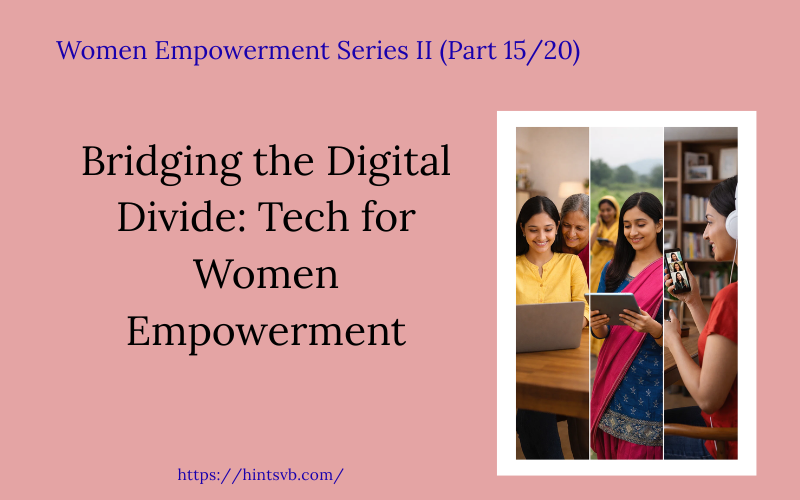
    Bridging the Digital Divide: Tech for Women Empowerment 15

    Women Empowerment Series II | Part 15 of 20

    Introduction: The Digital Divide and Women

    The digital divide refers to unequal access to digital technologies such as the internet, smartphones, computers, and digital skills. Globally, this divide is influenced by factors including geography, income, education, infrastructure, and gender. Women, particularly in developing regions, have lower access to digital tools and digital literacy compared to men.

    Bridging the Digital Divide

    According to the International Telecommunication Union (ITU), women are less likely than men to use the internet in many parts of the world. This gap limits participation in online education, digital employment, financial platforms, healthcare services, and information systems. Limited access also affects the ability to use government portals, digital banking, and e-commerce services.

    Bridging the Digital Divide has become a measurable objective within technology-driven women empowerment strategies. Governments, private organizations, and international institutions track indicators such as internet usage, device ownership, and digital skills to assess progress. Addressing infrastructure gaps, affordability issues, and digital literacy barriers is central to Bridging the Digital Divide in regions where women remain underrepresented in digital access and participation.

    Understanding the Gender-Based Digital Divide

    The digital divide is not only about access to devices. It also includes differences in internet availability, digital skills, usage patterns, online participation, and representation in technology-related fields. In low- and middle-income countries, women are significantly less likely to own smartphones or have consistent internet access. Economic constraints, education levels, and social norms contribute to this disparity.

    According to UN Women, in some regions, women are up to 30% less likely than men to use digital services. This gap limits access to online education, remote employment, financial platforms, and public digital services. Reduced participation also affects women’s visibility in technology-driven sectors such as data services, digital marketing, and e-governance.

    Bridging the Digital Divide requires addressing not only infrastructure and affordability, but also skill development and digital participation gaps that continue to affect women’s access to technology-based opportunities.

    Internet Access and Infrastructure

    Access to the internet remains uneven across regions. Urban areas typically have better connectivity than rural areas. Women in rural communities often rely on shared devices or public access points.

    Infrastructure limitations include:

    • Limited broadband coverage
    • Unreliable electricity
    • High data costs
    • Low smartphone penetration

    In many countries, digital infrastructure development has focused on commercial centers, leaving rural populations underserved. Women are disproportionately affected due to lower income levels and mobility restrictions in some societies.

    Device Ownership and Affordability

    Smartphone ownership is a key factor in digital inclusion. Research by GSMA shows that women in low-income countries are less likely to own smartphones compared to men.

    Primary barriers include:

    • Cost of devices
    • Cost of data plans
    • Limited financial independence
    • Lack of digital payment access

    Without personal devices, consistent digital access becomes difficult. This restricts participation in online education, e-commerce, telemedicine, and government platforms.

    Digital Literacy and Skills

    Digital literacy refers to the ability to use digital tools effectively. This includes basic tasks such as browsing the internet, using email, and operating mobile applications.

    Many women lack access to formal digital training. Factors contributing to this include:

    • Limited schooling
    • Language barriers
    • Lack of training programs
    • Low confidence in technology use

    Digital skill gaps affect employment opportunities and participation in the digital economy.

    Education and Online Learning Platforms

    Digital platforms have expanded access to education through online courses, mobile learning applications, and virtual classrooms. These tools support learning in technical skills, business management, and academic subjects. However, women’s participation in digital education varies widely by region. Access depends on reliable internet connectivity, availability of personal devices, local-language content, and time flexibility.

    In many areas, women face constraints related to household responsibilities and limited digital infrastructure, which affect consistent participation in online learning. Rural regions often have fewer digital education resources compared to urban centers.

    EdTech platforms play a role in Bridging the Digital Divide by offering flexible learning options that reach women who lack access to traditional educational institutions, particularly in underserved communities.

    Technology in Employment and Work Access

    Digital tools enable remote work, freelancing, and online entrepreneurship across multiple sectors, including content creation, data services, customer support, e-commerce, and online education. Women can access these opportunities through digital platforms, provided they have adequate connectivity, digital literacy, and platform access.

    The growth of remote work has contributed to increased female workforce participation, particularly in service-based and platform-driven roles. However, limitations in infrastructure, skills, and device access continue to restrict broader inclusion.

    Bridging the Digital Divide is essential for expanding equal access to digital employment opportunities. Reliable connectivity and skill development remain central to Bridging the Digital Divide in workforce participation.

    Financial Technology and Digital Banking

    FinTech platforms provide access to:

    • Mobile banking
    • Digital payments
    • Online savings
    • Microloans

    Women with access to digital financial services can manage transactions independently. Government digital payment programs have increased financial inclusion in several countries.

    In India, for example, initiatives like Jan Dhan Yojana and UPI have expanded digital banking access, including for women in rural areas.

    However, barriers such as lack of documentation and digital skills still affect participation.

    E-Commerce and Online Business

    E-commerce platforms allow women to sell products without the need for physical storefronts. Digital marketplaces are commonly used for selling handicrafts, clothing, food products, and other home-based goods. Social media platforms also support online marketing, customer communication, and brand visibility.

    Participation in e-commerce depends on several factors, including internet access, digital payment systems, logistics support, and platform regulations. Reliable delivery networks and secure payment methods are necessary for consistent business operations.

    Women-owned digital businesses are growing, particularly in urban and semi-urban areas where infrastructure and connectivity are stronger. Expanding access to online marketplaces is part of Bridging the Digital Divide, especially for women in regions with limited commercial infrastructure.

    Health Technology and Telemedicine

    Telemedicine platforms provide remote access to healthcare services. Women can consult doctors online, access health information, and manage appointments digitally.

    Digital health tools support:

    • Maternal health
    • Mental health
    • Reproductive health
    • Chronic care management

    In regions with limited healthcare facilities, telemedicine improves service availability. However, digital literacy and device access remain necessary for effective use.

    Safety and Digital Tools

    Safety applications provide digital features such as location sharing, emergency alerts, and direct access to helpline services. These tools are designed to support women’s safety in both public and private spaces by enabling rapid communication during emergencies.

    The use of safety apps depends on smartphone ownership, internet access, and user awareness. Adoption rates vary by region, with higher usage in urban areas where connectivity and digital literacy levels are stronger. In rural or low-connectivity regions, limited device access reduces the reach of such applications.

    Expanding access to mobile technology and digital awareness programs contributes to Bridging the Digital Divide in the use of safety-related digital tools.

    Women in Technology Careers

    Women remain underrepresented in technology fields such as software development, data science, artificial intelligence, and engineering. Contributing factors include unequal access to STEM education, workplace culture challenges, hiring biases, and limited mentorship opportunities. In many regions, fewer women enroll in technical degree programs, which affects long-term workforce representation. Corporate leadership roles in technology also show lower female participation.

    Efforts to address these gaps include scholarships, coding initiatives, STEM outreach programs, and diversity-focused hiring policies. Expanding access to technical education and professional networks supports Bridging the Digital Divide in technology careers by improving women’s participation in high-demand digital sectors.

    Government Digital Inclusion Programs

    Many governments have introduced digital inclusion programs aimed at increasing women’s access to technology. These initiatives include digital literacy campaigns, free device distribution, broadband expansion projects, and online skill training programs. National strategies such as Digital India and Skill India focus on expanding internet access, improving digital infrastructure, and offering technology-based education for underserved populations.

    Public-private partnerships play a key role by combining government resources with private sector expertise. These collaborations support digital training centers, affordable connectivity solutions, and technology access in rural communities. Government-led initiatives contribute to Bridging the Digital Divide by improving women’s access to digital tools, services, and online platforms.

    Role of NGOs and Community Organizations

    Non-governmental organizations operate at the community level to support women’s digital inclusion. Their programs focus on digital skills training, online safety awareness, financial literacy, and technology-based entrepreneurship. NGOs often provide access to shared devices, local internet facilities, and practical digital education workshops.

    Many organizations collaborate with governments, technology companies, and international agencies to reach rural and underserved populations. These partnerships help expand training resources and improve technology access where infrastructure is limited. NGO-led initiatives support Bridging the Digital Divide by addressing local barriers to digital participation through community-based programs and targeted awareness campaigns.

    Cultural and Social Barriers

    Cultural norms significantly influence women’s access to technology in many regions. In some communities, restrictions exist on internet usage, mobile phone ownership, and online participation for women. Household decision-making structures, safety concerns, and traditional gender roles affect digital access.

    These social factors can limit women’s exposure to digital education, online employment, and financial services. Addressing cultural barriers requires policy frameworks, education initiatives, and community engagement programs that promote digital inclusion. Social awareness campaigns and institutional support contribute to Bridging the Digital Divide by encouraging broader acceptance of women’s participation in digital spaces.

    Cybersecurity and Online Risks

    Women face specific online risks, including harassment, privacy violations, and digital scams. These risks affect participation in social media, e-commerce, online education, and professional platforms. Limited awareness of cybersecurity practices increases vulnerability to data breaches and identity misuse.

    Digital safety education programs focus on secure password management, privacy settings, reporting mechanisms, and recognizing online fraud. Governments and technology platforms also implement safety tools to improve user protection. Expanding cybersecurity awareness supports Bridging the Digital Divide by enabling safer digital participation and reducing barriers created by online security concerns.

    Data Gaps and Representation

    Gender-disaggregated data is essential for measuring digital inclusion accurately. However, data gaps exist in areas such as internet usage, device ownership, digital employment, and access to online education. Inconsistent reporting limits the ability to design targeted technology policies for women.

    Improved data collection helps identify regional disparities, track program effectiveness, and guide infrastructure investment. International organizations, governments, and research institutions work to improve digital inclusion metrics. Strengthening data systems supports Bridging the Digital Divide by enabling evidence-based planning and more effective digital access strategies for women.

    Measuring Digital Inclusion Outcomes

    Digital inclusion progress is measured using indicators such as internet penetration, smartphone ownership, digital literacy rates, women’s participation in technology jobs, and access to digital financial services. These metrics help assess whether women are gaining equal access to digital resources.

    International organizations track inclusion levels across regions to evaluate policy impact and infrastructure development. Data analysis supports long-term planning for digital expansion initiatives. Monitoring outcomes contributes to Bridging the Digital Divide by identifying gaps, guiding investments, and supporting technology policies that improve women’s digital participation.

    Future Trends in Digital Inclusion

    Emerging technologies such as artificial intelligence, 5G connectivity, and mobile-first platforms have the potential to expand digital access globally. Faster networks improve connectivity in remote areas, while mobile-based services increase accessibility for users without computers.

    Digital platforms continue to evolve, offering new tools for education, employment, healthcare, and financial services. Policy alignment, infrastructure investment, and digital education remain critical to sustaining progress. These developments influence Bridging the Digital Divide by expanding technology access and supporting broader digital participation for women across different regions.

    Conclusion

    The digital divide continues to influence women’s access to technology, information systems, and economic opportunities. Factors such as infrastructure availability, device affordability, digital literacy levels, and social norms shape digital inclusion outcomes across regions. While technology provides platforms for education, employment, healthcare services, financial transactions, and online entrepreneurship, access remains uneven among different populations.

    Urban areas generally benefit from stronger connectivity and digital resources, while rural and underserved communities face persistent limitations. Government policies, private sector initiatives, NGO programs, and community-based efforts contribute to expanding digital access and skills.

    Bridging the Digital Divide remains a measurable objective within women empowerment strategies, as digital inclusion plays a significant role in economic participation, service access, and representation in technology-driven environments.

  • Empowering Women in Tech: Women Empowerment Series II (Part 12/20)
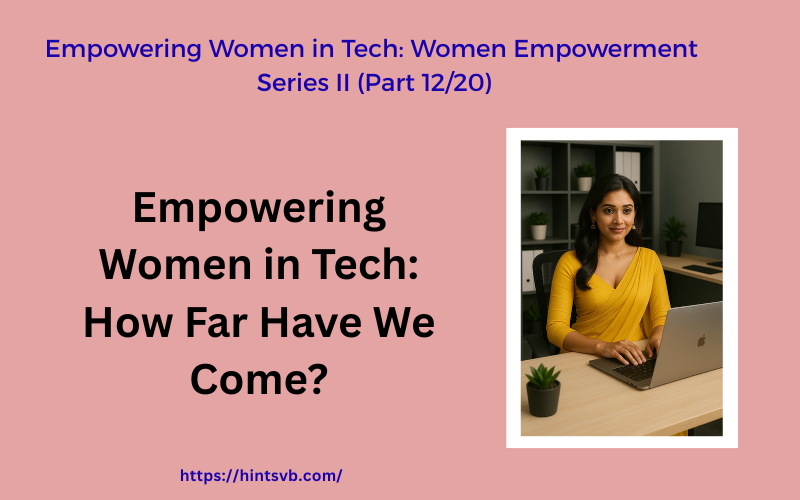
    Empowering Women in Tech: Women Empowerment Series II (Part 12/20)

    Empowering Women in Tech: How Far Have We Come?

    Introduction — The Tech Revolution and Women’s Place Within It

    We live in a world shaped by technology. Artificial intelligence, robotics, cloud computing, cybersecurity, blockchain, and biotechnology are changing everything around us. Innovation is transforming industries. It is creating new jobs. It is building a future driven by ideas and skills.

    But one question still stands strong:

    empowering women in tech
    Roshni Nadar Malhotra is an Indian businesswoman and philanthropist and the chairperson of HCL Technologies.

    How far have we come in empowering women in tech?

    For decades, the tech world remained a male-dominated space. Women were often discouraged from entering engineering, coding, or scientific research. Even when they contributed greatly — like Ada Lovelace, Kalpana Chawla, and Reshma Saujani — their representation stayed limited.

    Today, the story is shifting. Conversations about equality are louder. Opportunities are wider. Support systems are stronger. Empowering women in tech has become a global priority. It is no longer just a social cause. It is an economic need. It is a growth strategy. It is a path toward true innovation.

    Governments are investing in digital education. Schools are introducing STEM programs for girls. Companies are promoting diversity in hiring. Communities are encouraging parents to support daughters in technology.

    The world now understands one truth:
    Technology cannot reach its full potential without women.

    Women are not just participants. They are leaders, creators, thinkers, and innovators. And for real progress, the journey of empowering women in tech must continue with even more intention and support.

    This blog explores how far we have come. It highlights the challenges that remain. And it shows what the future can look like when we commit fully to empowering women in tech and building an equal digital world.

    The Early Struggles — Breaking Into a Male-Dominated Industry

    For many years, STEM fields — Science, Technology, Engineering, and Mathematics — were shaped around the belief that men were naturally more “technically capable.” This mindset created a rigid system. Girls were discouraged from choosing math or science. Women were often advised to avoid engineering colleges, coding courses, or research labs. The barriers were deep and layered.

    Women faced constant stereotypes that labelled them as weak in logic or problem-solving. They had very few role models to look up to, especially in technology careers. Educational opportunities were limited, and families often invested more in boys’ education. Workplace environments added further challenges — pay gaps, bias in hiring, and a lack of women-friendly policies.

    Cultural expectations made it even harder. Society placed men as breadwinners and women as homemakers, creating an emotional and psychological hurdle for those who wanted to pursue technical careers.

    These factors created a long-term pipeline problem: fewer girls in STEM resulted in fewer women in the tech workforce.

    Yet women continued to push boundaries. They studied harder, worked smarter, and proved stereotypes wrong. Their persistence laid the early foundation for today’s movement toward empowering women in tech. Each barrier broken brought us closer to a future where empowering women in tech is not a challenge, but a global priority.

    Technology & Innovation: A New Pathway for Equality

    Technology has become one of the strongest tools for equality. It has opened doors that were once closed for women. Earlier, women were limited by geography, financial constraints, or social restrictions. Many could not travel. Many could not access the right resources. Many had no exposure to STEM.

    Today, the digital world has changed everything.

    Online learning platforms allow women to study from anywhere. Remote jobs help them balance home responsibilities with professional growth. Digital marketplaces let women entrepreneurs sell products around the world. Social media gives them a space to learn, network, and showcase their skills freely. AI-based tools now offer mentorship, career guidance, and upskilling support at the tap of a button.

    How technology empowers women:

    • Online coding bootcamps reach rural and underserved communities
    • Remote jobs broaden career options for women
    • Digital payments support small women-led businesses
    • Social media builds confidence, visibility, and digital identity
    • AI and EdTech platforms teach coding, design, and advanced skills

    Digital empowerment is now a key pillar of empowering women in tech. When women gain digital access, they gain knowledge, confidence, and global opportunities. Technology removes boundaries and creates a level playing field. It transforms potential into progress and dreams into careers.

    With every new innovation, we move closer to truly empowering women in tech and building a future where equality is digital, accessible, and unstoppable.

    empowering women in tech
    Vineeta Singh (born 1983) is an Indian entrepreneur and CEO, co-founder of Sugar Cosmetics. She has been a Shark on the business reality TV .

    Women in STEM — From Classrooms to Boardrooms

    STEM education is the foundation of every tech career. And this is where some of the strongest changes are happening. More girls today are stepping into spaces once considered off-limits.

    Girls are now:
    • Choosing engineering with confidence
    • Learning coding at an early age
    • Studying AI, data science, and machine learning
    • Joining robotics and innovation clubs
    • Entering research labs and science fairs
    • Competing in global STEM competitions

    Programs such as Girls Who Code, STEM for Girls India, SheCodes, and Google Women Techmakers are inspiring millions of young minds. Schools and universities are actively building gender-inclusive classrooms to support this shift.

    This growing pipeline means more women will eventually enter boardrooms, leadership roles, and high-impact tech positions. However, representation is still not equal. Continued efforts, strong policies, and inclusive opportunities are necessary to ensure steady progress. Strengthening STEM education remains essential for empowering women in tech and building a balanced future.

    Women in Tech Leadership — How Far Have We Come?

    empowering women in tech
    Falguni Sanjay Nayar is an Indian billionaire businesswoman, who is the founder and CEO of the beauty and lifestyle retail company Nykaa.

    Women in tech leadership roles are increasing, but the progress is slow and uneven. Still, the rise is meaningful. Today, women lead some of the biggest global and Indian tech companies:

    Falguni Nayar (Nykaa)
    Roshni Nadar (HCL Technologies)
    Revathi Advaithi (Flex)
    Gwynne Shotwell (SpaceX)
    Reshma Saujani (Girls Who Code)

    These leaders show what is possible when efforts toward Empowering Women in Tech succeed. Leadership matters because visibility creates belief. When young girls see women leading technology companies, they realise they can dream beyond limits.

    But despite progress, challenges remain:
    • Women hold less than 20% of tech leadership positions globally
    • Work-life balance expectations place disproportionate pressure on women
    • Promotion pathways often contain hidden biases

    To achieve real equality, companies must build leadership pipelines, mentorship networks, and unbiased policies. Strengthening leadership opportunities is essential for truly Empowering Women in Tech and building a balanced future.

    The Tech Industry Gender Gap — Numbers That Matter

    Despite visible progress, the gender gap in the technology sector remains wide and deeply rooted. The numbers speak for themselves:

    • Women make up only 28% of the global STEM workforce (UNESCO).
    • In India, just 14% of tech professionals are women.
    • Women form only 22% of AI researchers, even though AI represents the future of innovation.
    • The gender pay gap persists, with women earning 18–22% less than men in the same technical roles.

    These statistics reveal a critical truth: Empowering Women in Tech is not just an equality initiative — it is an economic and global necessity. When women are excluded from the tech ecosystem, the world loses innovation, creativity, and diverse thinking.

    A balanced tech workforce leads to:
    • stronger innovation
    • faster problem-solving
    • better business decisions
    • more profitable companies
    • products that serve diverse populations

    Closing this gender gap is essential for the future of technology. The world cannot move forward if half of its talent is left behind. This is why Empowering Women in Tech must remain a top priority for governments, corporations, educators, and communities worldwide.

    Digital Empowerment: Giving Women the Tools They Deserve

    Digital empowerment is one of the strongest pillars of Empowering Women in Tech. Without access to the right tools, women cannot participate fully in the digital economy or the modern workplace. Technology today is not a luxury — it is a basic necessity for growth.

    Digital empowerment begins with simple yet powerful resources such as:
    • access to smartphones and affordable internet
    • training in basic and advanced digital skills
    • awareness of online safety and cyber hygiene
    • digital financial literacy and online banking
    • access to online job portals, e-learning platforms, and digital marketplaces

    When women gain digital access, their world expands. They can:
    • learn coding and AI skills from home
    • apply for high-paying remote tech roles
    • start online businesses and reach global customers
    • join global tech communities and mentorship networks
    • access 24/7 learning through platforms like Coursera, YouTube, and Udemy

    Digital literacy is now the gateway to independence, confidence, and equality. In a world driven by technology, Empowering Women in Tech starts with ensuring every woman has the digital tools she deserves.

    Women Entrepreneurs Driving Innovation

    Women entrepreneurs are reshaping global innovation with bold ideas, disruptive thinking, and unstoppable determination. Today, women-led startups are transforming industries ranging from beauty tech and agri-tech to fintech, ed-tech, AI solutions, and sustainable product development. Their rise highlights how Empowering Women in Tech is not just about jobs — it is about enabling women to build powerful ecosystems of change.

    Some inspiring examples include:
    Falguni Nayar (Nykaa) — India’s first self-made woman billionaire
    Vineeta Singh (Sugar Cosmetics) — redefining modern beauty
    Divya Gokulnath (BYJU’S) — revolutionizing digital education
    Whitney Wolfe Herd (Bumble) — empowering women in online spaces

    These success stories prove that technology is a pathway to independence, financial freedom, and global impact. Women-led companies often hire, mentor, and uplift other women, creating a chain of empowerment that strengthens communities. This ripple effect is exactly what Empowering Women in Tech aims to achieve — a future where women innovate fearlessly and lead confidently.

    Breaking Barriers in AI, Robotics & Coding

    Women are entering some of the most dynamic and high-growth industries of the future, including Artificial Intelligence, Robotics, Coding, Cybersecurity, Blockchain, and Data Science. These fields are shaping global innovation, and Empowering Women in Tech ensures that women contribute equally to building this technological future.

    However, deep-rooted biases still persist.
    AI systems are often trained on biased data that reflect historical stereotypes. Robotics continues to be viewed as a male-dominated space. Coding is still wrongly labelled as a “masculine” skill, and cybersecurity departments across the world lack female representation. These perceptions create barriers that discourage girls from exploring their technical potential.

    The solution begins early. Encouraging girls in STEM from school-level, giving them exposure to coding labs, competitions, and real-world role models helps break these norms. When girls are inspired early, they grow into confident innovators — proving that Empowering Women in Tech is essential for an inclusive, balanced technological future.

    Challenges That Still Remain

    Even with progress, many barriers continue to limit women’s participation in technology. Social and cultural expectations still influence career choices. Traditional gender roles, heavy family responsibilities, and limited encouragement for higher education often hold women back. These issues slow down the mission of Empowering Women in Tech at the very foundation.

    Workplace challenges also persist. Women still face bias during hiring, unequal pay, and limited opportunities for promotion. In some tech environments, safety concerns and discrimination discourage women from staying or growing in their careers. These factors create an uneven playing field.

    Emotional and psychological barriers add to the struggle. Many women experience self-doubt, imposter syndrome, and fear of failure, especially in male-dominated tech teams. These internal battles affect confidence and career choices.

    To overcome these challenges, families, institutions, workplaces, and communities must work together. Only collective effort can make Empowering Women in Tech a lasting and sustainable reality.

    The Future of Women in Tech — What Needs to Change

    The road ahead requires strong, consistent reforms at every level of society. Real progress will happen only when we strengthen the full ecosystem around girls and women in technology.

    1. Educational Reform

    Schools must introduce STEM curriculum early for girls. More scholarships are needed to support higher education. Mentorship programs should connect young learners with women role models in tech. These steps build confidence and create a strong pipeline.

    2. Corporate Reform
    Companies must adopt equal hiring practices. Flexible work policies are essential so women can balance personal and professional roles. Workplaces also need safety, inclusivity, and zero-tolerance for discrimination.

    3. Government Support
    Governments must fund STEM programs, skill development, and digital learning. Policies that support women entrepreneurs can help more women enter tech industries confidently.

    4. Community Support
    Families and communities must break stereotypes. Girls must be encouraged to pursue technology without fear or judgment.

    Empowering Women in Tech is not a one-time initiative. It is a continuous journey that requires commitment, reform, and collaboration. Only then can the future become truly inclusive.

    Conclusion — Empowering Women in Tech Is Empowering the Future

    Empowering Women in Tech is not just an initiative — it is a global transformation. It reshapes how societies think, how industries function, and how innovation grows. When women gain equal access to technology, they gain the power to create, lead, and influence the world alongside men.

    A future driven by technology cannot progress if half its population is left behind. Women must be included at every stage — from education to employment, from research labs to boardrooms.

    When women rise in tech:
    • innovation becomes deeper and more diverse
    • economies expand faster
    • societies become fairer
    • future generations gain stronger role models

    This shift benefits not just women, but all of humanity.

    Empowering Women in Tech is the key to unlocking a balanced, innovative, and inclusive world. The journey is still unfolding, and the next leap depends on collective effort.

    Let us rise together and build a future where every girl dreams fearlessly, learns confidently, and leads powerfully.