Tag: women empowerment

  • Empowering Women in Tech: Women Empowerment Series II (Part 12/20)
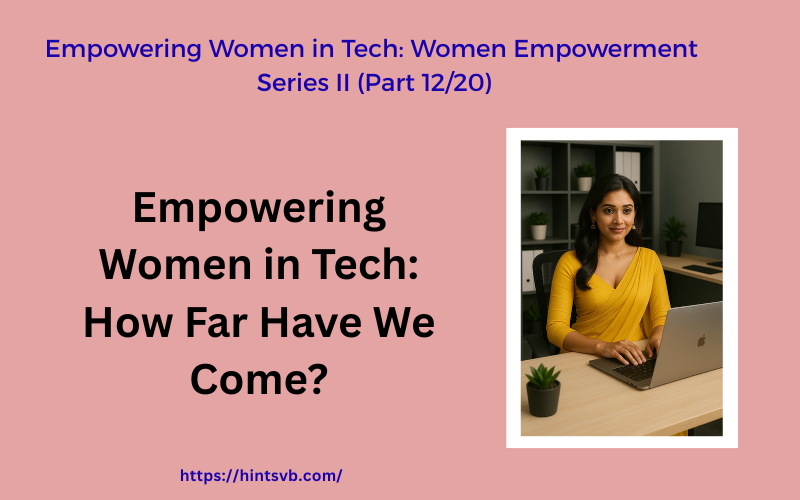
    Empowering Women in Tech: Women Empowerment Series II (Part 12/20)

    Empowering Women in Tech: How Far Have We Come?

    Introduction — The Tech Revolution and Women’s Place Within It

    We live in a world shaped by technology. Artificial intelligence, robotics, cloud computing, cybersecurity, blockchain, and biotechnology are changing everything around us. Innovation is transforming industries. It is creating new jobs. It is building a future driven by ideas and skills.

    But one question still stands strong:

    empowering women in tech
    Roshni Nadar Malhotra is an Indian businesswoman and philanthropist and the chairperson of HCL Technologies.

    How far have we come in empowering women in tech?

    For decades, the tech world remained a male-dominated space. Women were often discouraged from entering engineering, coding, or scientific research. Even when they contributed greatly — like Ada Lovelace, Kalpana Chawla, and Reshma Saujani — their representation stayed limited.

    Today, the story is shifting. Conversations about equality are louder. Opportunities are wider. Support systems are stronger. Empowering women in tech has become a global priority. It is no longer just a social cause. It is an economic need. It is a growth strategy. It is a path toward true innovation.

    Governments are investing in digital education. Schools are introducing STEM programs for girls. Companies are promoting diversity in hiring. Communities are encouraging parents to support daughters in technology.

    The world now understands one truth:
    Technology cannot reach its full potential without women.

    Women are not just participants. They are leaders, creators, thinkers, and innovators. And for real progress, the journey of empowering women in tech must continue with even more intention and support.

    This blog explores how far we have come. It highlights the challenges that remain. And it shows what the future can look like when we commit fully to empowering women in tech and building an equal digital world.

    The Early Struggles — Breaking Into a Male-Dominated Industry

    For many years, STEM fields — Science, Technology, Engineering, and Mathematics — were shaped around the belief that men were naturally more “technically capable.” This mindset created a rigid system. Girls were discouraged from choosing math or science. Women were often advised to avoid engineering colleges, coding courses, or research labs. The barriers were deep and layered.

    Women faced constant stereotypes that labelled them as weak in logic or problem-solving. They had very few role models to look up to, especially in technology careers. Educational opportunities were limited, and families often invested more in boys’ education. Workplace environments added further challenges — pay gaps, bias in hiring, and a lack of women-friendly policies.

    Cultural expectations made it even harder. Society placed men as breadwinners and women as homemakers, creating an emotional and psychological hurdle for those who wanted to pursue technical careers.

    These factors created a long-term pipeline problem: fewer girls in STEM resulted in fewer women in the tech workforce.

    Yet women continued to push boundaries. They studied harder, worked smarter, and proved stereotypes wrong. Their persistence laid the early foundation for today’s movement toward empowering women in tech. Each barrier broken brought us closer to a future where empowering women in tech is not a challenge, but a global priority.

    Technology & Innovation: A New Pathway for Equality

    Technology has become one of the strongest tools for equality. It has opened doors that were once closed for women. Earlier, women were limited by geography, financial constraints, or social restrictions. Many could not travel. Many could not access the right resources. Many had no exposure to STEM.

    Today, the digital world has changed everything.

    Online learning platforms allow women to study from anywhere. Remote jobs help them balance home responsibilities with professional growth. Digital marketplaces let women entrepreneurs sell products around the world. Social media gives them a space to learn, network, and showcase their skills freely. AI-based tools now offer mentorship, career guidance, and upskilling support at the tap of a button.

    How technology empowers women:

    • Online coding bootcamps reach rural and underserved communities
    • Remote jobs broaden career options for women
    • Digital payments support small women-led businesses
    • Social media builds confidence, visibility, and digital identity
    • AI and EdTech platforms teach coding, design, and advanced skills

    Digital empowerment is now a key pillar of empowering women in tech. When women gain digital access, they gain knowledge, confidence, and global opportunities. Technology removes boundaries and creates a level playing field. It transforms potential into progress and dreams into careers.

    With every new innovation, we move closer to truly empowering women in tech and building a future where equality is digital, accessible, and unstoppable.

    empowering women in tech
    Vineeta Singh (born 1983) is an Indian entrepreneur and CEO, co-founder of Sugar Cosmetics. She has been a Shark on the business reality TV .

    Women in STEM — From Classrooms to Boardrooms

    STEM education is the foundation of every tech career. And this is where some of the strongest changes are happening. More girls today are stepping into spaces once considered off-limits.

    Girls are now:
    • Choosing engineering with confidence
    • Learning coding at an early age
    • Studying AI, data science, and machine learning
    • Joining robotics and innovation clubs
    • Entering research labs and science fairs
    • Competing in global STEM competitions

    Programs such as Girls Who Code, STEM for Girls India, SheCodes, and Google Women Techmakers are inspiring millions of young minds. Schools and universities are actively building gender-inclusive classrooms to support this shift.

    This growing pipeline means more women will eventually enter boardrooms, leadership roles, and high-impact tech positions. However, representation is still not equal. Continued efforts, strong policies, and inclusive opportunities are necessary to ensure steady progress. Strengthening STEM education remains essential for empowering women in tech and building a balanced future.

    Women in Tech Leadership — How Far Have We Come?

    empowering women in tech
    Falguni Sanjay Nayar is an Indian billionaire businesswoman, who is the founder and CEO of the beauty and lifestyle retail company Nykaa.

    Women in tech leadership roles are increasing, but the progress is slow and uneven. Still, the rise is meaningful. Today, women lead some of the biggest global and Indian tech companies:

    Falguni Nayar (Nykaa)
    Roshni Nadar (HCL Technologies)
    Revathi Advaithi (Flex)
    Gwynne Shotwell (SpaceX)
    Reshma Saujani (Girls Who Code)

    These leaders show what is possible when efforts toward Empowering Women in Tech succeed. Leadership matters because visibility creates belief. When young girls see women leading technology companies, they realise they can dream beyond limits.

    But despite progress, challenges remain:
    • Women hold less than 20% of tech leadership positions globally
    • Work-life balance expectations place disproportionate pressure on women
    • Promotion pathways often contain hidden biases

    To achieve real equality, companies must build leadership pipelines, mentorship networks, and unbiased policies. Strengthening leadership opportunities is essential for truly Empowering Women in Tech and building a balanced future.

    The Tech Industry Gender Gap — Numbers That Matter

    Despite visible progress, the gender gap in the technology sector remains wide and deeply rooted. The numbers speak for themselves:

    • Women make up only 28% of the global STEM workforce (UNESCO).
    • In India, just 14% of tech professionals are women.
    • Women form only 22% of AI researchers, even though AI represents the future of innovation.
    • The gender pay gap persists, with women earning 18–22% less than men in the same technical roles.

    These statistics reveal a critical truth: Empowering Women in Tech is not just an equality initiative — it is an economic and global necessity. When women are excluded from the tech ecosystem, the world loses innovation, creativity, and diverse thinking.

    A balanced tech workforce leads to:
    • stronger innovation
    • faster problem-solving
    • better business decisions
    • more profitable companies
    • products that serve diverse populations

    Closing this gender gap is essential for the future of technology. The world cannot move forward if half of its talent is left behind. This is why Empowering Women in Tech must remain a top priority for governments, corporations, educators, and communities worldwide.

    Digital Empowerment: Giving Women the Tools They Deserve

    Digital empowerment is one of the strongest pillars of Empowering Women in Tech. Without access to the right tools, women cannot participate fully in the digital economy or the modern workplace. Technology today is not a luxury — it is a basic necessity for growth.

    Digital empowerment begins with simple yet powerful resources such as:
    • access to smartphones and affordable internet
    • training in basic and advanced digital skills
    • awareness of online safety and cyber hygiene
    • digital financial literacy and online banking
    • access to online job portals, e-learning platforms, and digital marketplaces

    When women gain digital access, their world expands. They can:
    • learn coding and AI skills from home
    • apply for high-paying remote tech roles
    • start online businesses and reach global customers
    • join global tech communities and mentorship networks
    • access 24/7 learning through platforms like Coursera, YouTube, and Udemy

    Digital literacy is now the gateway to independence, confidence, and equality. In a world driven by technology, Empowering Women in Tech starts with ensuring every woman has the digital tools she deserves.

    Women Entrepreneurs Driving Innovation

    Women entrepreneurs are reshaping global innovation with bold ideas, disruptive thinking, and unstoppable determination. Today, women-led startups are transforming industries ranging from beauty tech and agri-tech to fintech, ed-tech, AI solutions, and sustainable product development. Their rise highlights how Empowering Women in Tech is not just about jobs — it is about enabling women to build powerful ecosystems of change.

    Some inspiring examples include:
    Falguni Nayar (Nykaa) — India’s first self-made woman billionaire
    Vineeta Singh (Sugar Cosmetics) — redefining modern beauty
    Divya Gokulnath (BYJU’S) — revolutionizing digital education
    Whitney Wolfe Herd (Bumble) — empowering women in online spaces

    These success stories prove that technology is a pathway to independence, financial freedom, and global impact. Women-led companies often hire, mentor, and uplift other women, creating a chain of empowerment that strengthens communities. This ripple effect is exactly what Empowering Women in Tech aims to achieve — a future where women innovate fearlessly and lead confidently.

    Breaking Barriers in AI, Robotics & Coding

    Women are entering some of the most dynamic and high-growth industries of the future, including Artificial Intelligence, Robotics, Coding, Cybersecurity, Blockchain, and Data Science. These fields are shaping global innovation, and Empowering Women in Tech ensures that women contribute equally to building this technological future.

    However, deep-rooted biases still persist.
    AI systems are often trained on biased data that reflect historical stereotypes. Robotics continues to be viewed as a male-dominated space. Coding is still wrongly labelled as a “masculine” skill, and cybersecurity departments across the world lack female representation. These perceptions create barriers that discourage girls from exploring their technical potential.

    The solution begins early. Encouraging girls in STEM from school-level, giving them exposure to coding labs, competitions, and real-world role models helps break these norms. When girls are inspired early, they grow into confident innovators — proving that Empowering Women in Tech is essential for an inclusive, balanced technological future.

    Challenges That Still Remain

    Even with progress, many barriers continue to limit women’s participation in technology. Social and cultural expectations still influence career choices. Traditional gender roles, heavy family responsibilities, and limited encouragement for higher education often hold women back. These issues slow down the mission of Empowering Women in Tech at the very foundation.

    Workplace challenges also persist. Women still face bias during hiring, unequal pay, and limited opportunities for promotion. In some tech environments, safety concerns and discrimination discourage women from staying or growing in their careers. These factors create an uneven playing field.

    Emotional and psychological barriers add to the struggle. Many women experience self-doubt, imposter syndrome, and fear of failure, especially in male-dominated tech teams. These internal battles affect confidence and career choices.

    To overcome these challenges, families, institutions, workplaces, and communities must work together. Only collective effort can make Empowering Women in Tech a lasting and sustainable reality.

    The Future of Women in Tech — What Needs to Change

    The road ahead requires strong, consistent reforms at every level of society. Real progress will happen only when we strengthen the full ecosystem around girls and women in technology.

    1. Educational Reform

    Schools must introduce STEM curriculum early for girls. More scholarships are needed to support higher education. Mentorship programs should connect young learners with women role models in tech. These steps build confidence and create a strong pipeline.

    2. Corporate Reform
    Companies must adopt equal hiring practices. Flexible work policies are essential so women can balance personal and professional roles. Workplaces also need safety, inclusivity, and zero-tolerance for discrimination.

    3. Government Support
    Governments must fund STEM programs, skill development, and digital learning. Policies that support women entrepreneurs can help more women enter tech industries confidently.

    4. Community Support
    Families and communities must break stereotypes. Girls must be encouraged to pursue technology without fear or judgment.

    Empowering Women in Tech is not a one-time initiative. It is a continuous journey that requires commitment, reform, and collaboration. Only then can the future become truly inclusive.

    Conclusion — Empowering Women in Tech Is Empowering the Future

    Empowering Women in Tech is not just an initiative — it is a global transformation. It reshapes how societies think, how industries function, and how innovation grows. When women gain equal access to technology, they gain the power to create, lead, and influence the world alongside men.

    A future driven by technology cannot progress if half its population is left behind. Women must be included at every stage — from education to employment, from research labs to boardrooms.

    When women rise in tech:
    • innovation becomes deeper and more diverse
    • economies expand faster
    • societies become fairer
    • future generations gain stronger role models

    This shift benefits not just women, but all of humanity.

    Empowering Women in Tech is the key to unlocking a balanced, innovative, and inclusive world. The journey is still unfolding, and the next leap depends on collective effort.

    Let us rise together and build a future where every girl dreams fearlessly, learns confidently, and leads powerfully.

  • How NGOs Are Transforming Women’s Lives | Women Empowerment Series II — Part 11 of 20
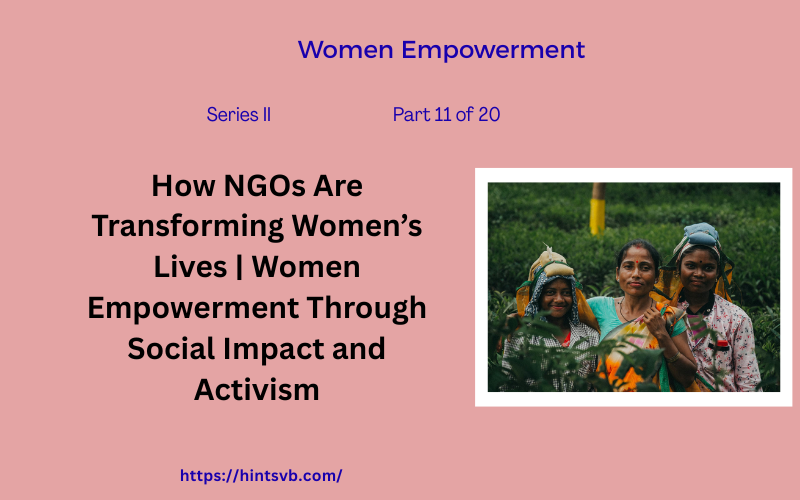
    How NGOs Are Transforming Women’s Lives | Women Empowerment Series II — Part 11 of 20

    How NGOs Are Transforming Women’s Lives | Women Empowerment Through Social Impact and Activism

    Introduction — When Change Begins at the Grassroots

    True empowerment doesn’t start in boardrooms or parliaments — it begins in villages, classrooms, and communities, where ordinary women take extraordinary steps.
    Across India and around the world, How NGOs Are Transforming Women’s Lives has become a story of courage, creativity, and compassion.

    From self-help groups in Tamil Nadu to digital literacy programs in Rajasthan, NGOs have been building bridges between potential and opportunity. They don’t just provide charity; they cultivate confidence. They don’t just offer resources; they offer direction.

    Unlike many top-down programs, NGOs listen before they act. They understand that women empowerment through community work cannot succeed through policies alone — it must grow from empathy and participation.

    Every time a woman learns to earn, speak, or lead, her entire family — and often her whole community — moves forward. That’s why How NGOs Are Transforming Women’s Lives isn’t just a social story; it’s the pulse of nation-building.

    What Makes NGOs Powerful Agents of Change

    NGOs are the heartbeat of social change because they work where it matters most — at the grassroots. They transform compassion into structure and empathy into action.

    How NGOs Are Transforming Women’s Lives lies in their ability to adapt, connect, and empower. They bridge the gap between government schemes and local realities, translating policy into practice.

    NGOs operate with flexibility, human touch, and cultural sensitivity. They engage directly with families, understand unspoken barriers, and craft programs that fit real needs.

    Their superpower is connection — connecting education to opportunity, skill to income, and awareness to action.
    That’s why How NGOs Are Transforming Women’s Lives continues to resonate — because they create systems of empowerment rooted in humanity, not hierarchy.

    Education — The Foundation of Empowerment

    Education is the seed from which all empowerment grows. It opens minds, builds confidence, and reshapes destinies.

    How NGOs Are Transforming Women’s Lives

    NGOs like Pratham, Teach For India, and CARE India have shown how access to education transforms not only women but entire generations.
    Through adult literacy programs, evening classes, and digital schools, NGOs bring learning to those who were once left behind.

    How NGOs Are Transforming Women’s Lives through education can be seen in rural villages where young girls return to classrooms, and mothers learn to read letters from their children working in cities.

    How NGOs Are Transforming Women’s Lives

    When a woman learns, she gains agency — the power to choose her future. NGOs don’t teach women what to think, but how to think, empowering them with independence of mind.

    Knowledge is the first step toward freedom — and every educated woman becomes a beacon of hope for her community.

    Economic Independence — Turning Skills Into Security

    Economic empowerment is more than earning — it’s emotional freedom wrapped in financial strength. When a woman earns her own income, she doesn’t just add to her household; she earns her voice, her choices, and her confidence. That’s why economic independence remains one of the most powerful ways to measure How NGOs Are Transforming Women’s Lives.

    Through self-help groups (SHGs) and vocational training, NGOs equip women with practical skills — tailoring, food processing, handicrafts, digital marketing, and even eco-friendly product creation. These platforms allow women to collaborate, share resources, and build micro-enterprises that sustain their families and uplift communities.

    Organizations like SEWA in Gujarat and Kudumbashree in Kerala have become shining

    How NGOs Are Transforming Women’s Lives

    examples of How NGOs Are Transforming Women’s Lives through women-led economic models. When women become earners, they evolve into leaders — managing funds, mentoring peers, and inspiring others to rise.

    This transformation goes beyond livelihood — it turns income into identity, dependence into dignity, and skills into long-term security.

    Health and Hygiene — Empowerment Through Awareness

    No empowerment is complete without good health. True strength begins when a woman understands her body and her right to care for it. NGOs like Goonj, Smile Foundation, and CARE India are helping women see that health is not a privilege — it’s power. Through campaigns on menstrual hygiene, nutrition, maternal care, and sanitation, they address issues that were long buried under taboos and neglect.

    In many rural areas, conversations about menstruation, once silenced by stigma, are now opening up because NGOs dared to speak where silence ruled. These initiatives are changing attitudes, one discussion at a time. This, too, is How NGOs Are Transforming Women’s Lives — by restoring dignity through awareness. After all, healthy women nurture healthy families, and healthy families create a stronger, more resilient nation.

    Legal Awareness and Women’s Rights

    Knowing your rights is the first step toward reclaiming your power. True empowerment begins when women understand that the law protects their dignity, safety, and equality. NGOs like Majlis Legal Centre, ActionAid India, and Swayam Kolkata are leading this movement through legal literacy workshops that educate women about domestic violence laws, property and inheritance rights, workplace equality, and protection against harassment.

    These sessions don’t just spread information — they build confidence, showing women that justice is their right, not a favour. Legal empowerment is a quiet revolution that transforms fear into courage and dependence into determination. The real proof of How NGOs Are Transforming Women’s Lives lies in courtrooms where women now stand not as victims, but as voices — demanding justice, respect, and the life they deserve, with the law firmly on their side.

    Breaking Social Barriers — From Awareness to Action

    Social transformation demands courage — the courage to question norms and challenge centuries of conditioning that confined women’s roles. NGOs like Breakthrough India, Oxfam India, and CRY are driving this change using creative tools like art, theatre, and storytelling to spark conversations about gender equality and dismantle stereotypes. Campaigns such as Bell Bajao (Ring the Bell) have redefined activism by urging men and communities to take responsibility and speak up against violence.

    This is How NGOs Are Transforming Women’s Lives — not through confrontation, but through conversation, participation, and empathy. These initiatives prove that change doesn’t always begin with loud protests; sometimes, it begins with a single voice refusing silence — a mother teaching her daughter to question, a neighbour choosing to intervene, and a community learning to care with courage.

    Digital Empowerment — Women in the Tech Era

    In today’s digital age, true empowerment is impossible without connectivity and digital literacy. NGOs are bridging this gap by ensuring that women — especially in rural India — gain access to the tools that define progress. Programs like Digital Sakhi and Internet Saathi are empowering women to confidently use technology for mobile banking, online education, e-commerce, and digital marketing. Women who once relied on middlemen or local agents now manage their own financial transactions, promote home-grown products online, and even train other women in their communities.

    This transformation is more than technological — it’s emotional and economic liberation. By merging technology with training, NGOs are ensuring that even in the most remote villages, women are active participants in India’s digital revolution. The smartphone in their hands has become more than a device — it is a symbol of freedom, confidence, and self-reliance in the 21st century.

    Environmental Empowerment — Women as Eco-Leaders

    Empowerment is not only social or economic — it is also ecological. True progress comes when women lead with awareness of both community and nature. NGOs like Navdanya and Barefoot College are redefining sustainability by training women as solar engineers, organic farmers, and environmental educators. In the deserts of Rajasthan, the inspiring “Solar Mamas” — grandmothers turned engineers — are lighting up villages that once lived in darkness.

    Across India, women are learning rainwater harvesting, seed preservation, and organic cultivation, becoming protectors of the planet and providers for their people. Through these initiatives, women are restoring balance — to both soil and society. This is yet another way How NGOs Are Transforming Women’s Lives, showing that empowerment and sustainability are inseparable. When women lead environmental change, they nurture not just families, but the future of the Earth itself.

    Emotional Wellness and Mental Health

    Empowerment is not only about achievements or independence — it begins with inner peace and emotional strength. Recognizing this, many NGOs now weave mental health and emotional wellness into their empowerment programs. Through counseling sessions, group therapy, and community support circles, they create safe spaces where women can express their pain, trauma, and hope without fear of judgment. Survivors of violence and abuse find not just shelter, but sisterhood — a network of empathy that helps them rebuild from within.

    These initiatives remind society that healing the mind is as important as empowering the body. In this quiet process of emotional recovery, How NGOs Are Transforming Women’s Lives shines brightest — proving that true empowerment is not only about progress, but also about peace, self-worth, and the courage to smile again. Healing the heart, after all, is the first step toward lasting confidence.

    Women in Leadership — From Learners to Leaders

    Leadership flourishes when opportunity meets encouragement. Across India, NGOs are nurturing this transformation by providing mentorship, capacity-building, and leadership training that help women evolve from learners to leaders — from participants to policymakers. Programs initiated by organizations such as PRADAN, SEWA, and CARE India have empowered thousands of women who once led self-help groups (SHGs) to now serve as panchayat representatives, NGO trainers, educators, and entrepreneurs.

    These women are not just shaping their futures but also influencing decisions that impact entire communities. This is How NGOs Are Transforming Women’s Lives — by redefining leadership as service rooted in empathy, accountability, and shared growth. True leadership is not about power over others, but power within oneself. And when one woman rises to lead, she doesn’t walk alone — she carries an entire community forward with her.

    Collaboration Between NGOs, Government, and CSR Programs

    Sustainable empowerment is not achieved in isolation — it thrives on collaboration and collective purpose. Across India, NGOs are working hand-in-hand with government initiatives like Skill India, Beti Bachao Beti Padhao, and National Rural Livelihood Mission, as well as with corporate CSR programs from companies such as TATA, Mahindra, and Hindustan Unilever (HUL). This powerful synergy combines grassroots experience, institutional support, and financial strength, creating a unified ecosystem for women’s advancement.

    Together, they amplify impact — from vocational training and education to health care and digital inclusion. Such partnerships ensure that empowerment moves beyond isolated projects to become a sustained movement of transformation. This is why How NGOs Are Transforming Women’s Lives is not just an NGO initiative — it’s a national collaboration where the public, private, and people’s sectors unite for one shared goal: equality with dignity.

    How NGOs Drive Rural Transformation

    In rural India, empowerment begins with access — access to education, livelihood, finance, and most importantly, a voice. NGOs play a crucial role in bridging these gaps by creating opportunities where systems once failed. From dairy collectives in Punjab to weaving and handicraft groups in Assam, rural women are emerging as pillars of local economies, driving self-reliance and community growth.

    These initiatives go beyond skill training — they nurture confidence, cooperation, and leadership at the grassroots level. As women learn to manage accounts, lead meetings, and make independent decisions, they reshape not only their families but their entire villages. Each self-help group, each microenterprise, becomes a micro-revolution of progress. This ongoing rural awakening beautifully reflects How NGOs Are Transforming Women’s Lives — one skill, one meeting, and one success story at a time.

    The Role of Gen Z and Modern Volunteers

    A new generation of changemakers is redefining social impact — young, digital-savvy, and purpose-driven. Gen Z volunteers are joining hands with NGOs not just as helpers, but as innovators, creators, and catalysts of change. They contribute as trainers, designers, social media strategists, storytellers, and campaigners, using technology to amplify voices that once went unheard. With their creativity and online reach, they turn awareness into action — running digital mentorship programs, producing short films, and designing campaigns that challenge stereotypes.

    This modern wave of volunteering infuses energy, empathy, and innovation into traditional social work. By merging digital tools with grassroots passion, Gen Z is ensuring that empowerment travels faster and farther. Through their efforts, the movement of How NGOs Are Transforming Women’s Lives expands beyond physical boundaries — bridging the gap between activism, awareness, and lasting social change.

    Conclusion — When Empowerment Becomes a Movement

    Empowerment is not charity — it is evolution, a collective awakening of potential that transforms lives from within. Every time an NGO teaches a woman to lead with confidence, earn with dignity, or speak without fear, the very fabric of society grows stronger. This is not about isolated success stories — it’s about rewriting the narrative of what women can achieve when given opportunity and respect.

    The true impact of How NGOs Are Transforming Women’s Lives cannot be fully captured in numbers or reports. It is seen in the quiet resilience of a woman who stands up for her rights, in the steady hands that now build livelihoods, and in the fearless eyes that once looked down but now look forward with purpose.

    When NGOs, communities, corporates, and governments come together, empowerment turns into a movement — one that bridges inequality with inclusion. What begins as awareness evolves into action, and what starts as support becomes solidarity.

    Each empowered woman becomes a catalyst of change, inspiring others and shaping generations. She transforms not just her own destiny but the collective spirit of her community.

    That is the silent revolution NGOs have nurtured — one that continues to grow, heartbeat by heartbeat, shaping a stronger, fairer, and more compassionate India. 🌸