Tag: Women Empowerment Through Technology

  • Online Platforms Empowering Women Around the World 16
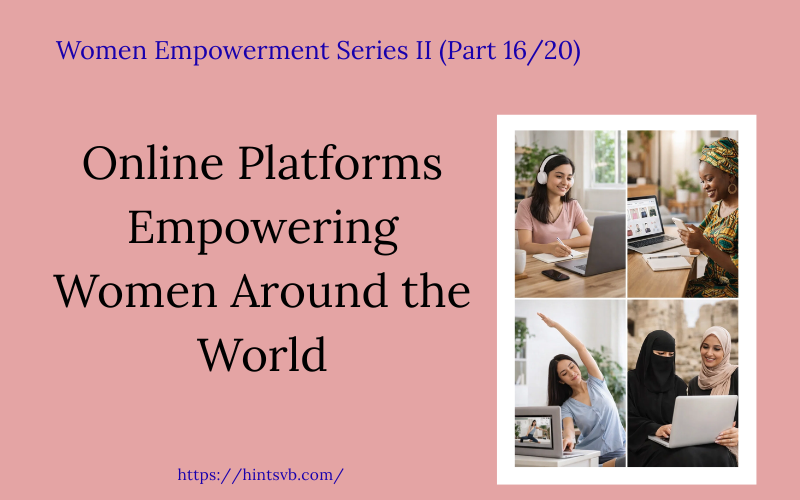
    Online Platforms Empowering Women Around the World 16

    Women Empowerment Series II (Part 16/20)

    How Digital Spaces Are Expanding Access, Voice, and Opportunity

    Introduction: The Digital Shift in Women Empowerment

    The digital age has transformed how women access education, work, support, and opportunity. Online platforms empowering women have created new pathways that were previously limited by geography, social norms, and economic barriers. Today, women across the world use technology to learn, connect, earn, and express themselves in ways that were not possible before. From professional networking platforms to online learning portals and digital marketplaces, technology has become a powerful tool for women empowerment through innovation.

    Online Platforms Empowering Women

    Online platforms empowering women offer more than just information. They provide visibility, community, and access to resources that support personal and professional growth. Women can now share experiences, build skills, start businesses, and participate in global conversations without leaving their homes. Digital empowerment for women is no longer limited to urban centers; it is reaching remote and underserved areas as well.

    As technology continues to evolve, online platforms empowering women are shaping a more inclusive future. They help women overcome traditional barriers, create independent opportunities, and build confidence in their abilities. The digital shift is redefining empowerment in a global context.

    The Rise of Digital Spaces for Women

    Digital spaces designed for women have grown rapidly in recent years. Online platforms empowering women focus on education, safety, career growth, health, and emotional well-being. These platforms provide structured environments where women can learn, share, and support each other without social pressure.

    Technology for women empowerment has expanded through dedicated websites, apps, and online communities. Many platforms offer resources on leadership, financial literacy, health awareness, and legal rights. These digital spaces allow women to explore important topics privately and confidently.

    Global women empowerment platforms also connect women from different cultures and backgrounds. Shared experiences create understanding and solidarity. Digital inclusion for women ensures that knowledge and support are accessible regardless of location.

    Online platforms empowering women are not limited to professional development. They also address emotional wellness, safety, and identity. Women find spaces where their voices matter and their experiences are respected. The rise of these digital spaces shows how technology can create supportive environments that promote empowerment in everyday life.

    Online Education and Skill Development

    Education has become more accessible through online platforms empowering women. E-learning programs allow women to gain skills in technology, business, communication, and creative fields. These platforms remove barriers such as travel, cost, and time constraints.

    Online education for women includes professional courses, certifications, and self-paced learning. Women can develop technical skills, improve language proficiency, and gain knowledge in emerging industries. This supports women empowerment through technology by increasing employability and confidence.

    Many digital empowerment for women programs focus on practical skills such as coding, digital marketing, finance, and entrepreneurship. These skills help women enter competitive job markets and build independent careers.

    Online platforms empowering women also provide mentorship, career guidance, and peer learning. Virtual classrooms create inclusive learning environments where women feel supported. Education through digital platforms is reshaping how women prepare for the future, making learning more flexible, affordable, and globally accessible.

    Digital Communities and Safe Spaces

    Online platforms empowering women often function as digital communities where emotional and social support are available. These safe spaces allow women to share experiences without fear of judgment. Topics such as mental health, relationships, workplace challenges, and personal growth are openly discussed.

    Digital empowerment for women includes emotional safety. Many platforms provide moderated forums where respectful communication is encouraged. This creates an environment of trust and mutual understanding.

    Women empowerment through technology is not only about skills and careers; it is also about connection. Virtual communities reduce isolation and provide a sense of belonging. Women from different regions can exchange ideas, offer support, and learn from each other’s experiences.

    Online platforms empowering women help normalize conversations about well-being, identity, and challenges. These digital safe spaces strengthen emotional resilience and social confidence. Through community support, women gain reassurance, motivation, and shared understanding in their empowerment journey.

    Women Entrepreneurship Through Online Platforms

    Digital marketplaces and business platforms have transformed women entrepreneurship. Online platforms empowering women provide tools for launching, managing, and promoting businesses. Women can sell products, offer services, and reach global audiences without traditional business barriers.

    Women entrepreneurship online includes e-commerce, freelance services, consulting, and digital content creation. Technology for women empowerment allows women to work independently and build sustainable income sources.

    Online platforms empowering women offer marketing tools, payment systems, and customer engagement features. These digital tools simplify business operations and reduce financial risk. Women can test ideas, scale businesses, and explore new markets with flexibility.

    Global women empowerment platforms also offer training in business skills, financial management, and branding. Digital inclusion for women ensures that entrepreneurial opportunities are accessible to both urban and rural populations. Online entrepreneurship empowers women to achieve financial independence and professional recognition.

    Social Media as a Voice for Women

    Social media has become a powerful voice for women across the world. Online platforms empowering women allow individuals to share stories, raise awareness, and challenge social norms. Women use digital platforms to express opinions, highlight issues, and celebrate achievements.

    Women empowerment through technology is visible in movements that promote equality, safety, and representation. Social media connects women globally, creating shared narratives and collective visibility.

    Digital empowerment for women includes the ability to influence public conversation. Online platforms allow women to participate in discussions about education, health, careers, and rights. This strengthens representation and awareness.

    Online platforms empowering women also support creative expression through writing, art, and video content. Social media has become a space where women define their identity and voice. Technology provides visibility, connection, and influence in shaping social perspectives.

    Technology Bridging the Gender Gap

    Technology plays a key role in reducing gender inequality. Online platforms empowering women offer equal access to information, education, and professional opportunities. Digital inclusion for women helps close gaps in knowledge, skills, and economic participation.

    Women empowerment through technology ensures that women can participate in digital economies. Online learning, remote work, and digital entrepreneurship create flexible career options. This supports work-life balance and independence.

    Global women empowerment platforms connect women to international networks. Exposure to global perspectives strengthens confidence and ambition. Technology removes geographic limitations and expands opportunity.

    Online platforms empowering women also promote digital literacy. Skills such as online communication, cybersecurity awareness, and digital finance increase independence. Technology becomes a bridge between potential and opportunity, helping women overcome traditional barriers.

    Innovation Supporting Rural and Underserved Women

    Innovation has extended empowerment beyond cities. Online platforms empowering women reach rural and underserved communities through mobile technology and internet access. Women in remote areas can access education, healthcare information, and financial tools digitally.

    Digital empowerment for women includes access to agricultural training, business resources, and skill development programs. Mobile apps and online courses provide practical knowledge.

    Women empowerment through technology supports economic participation in rural regions. Online marketplaces allow women to sell handmade products, local services, and agricultural goods.

    Global women empowerment platforms offer multilingual content, ensuring accessibility across cultures. Innovation ensures that digital tools are inclusive and adaptable. Online platforms empowering women help reduce regional inequality and promote opportunity regardless of location.

    Financial Empowerment Through Digital Tools

    Financial independence is a major aspect of empowerment. Online platforms empowering women provide access to digital banking, fintech services, and income platforms. Women can manage money, save, invest, and earn online.

    Technology for women empowerment includes mobile wallets, online payment systems, and digital financial education. These tools support economic confidence and transparency.

    Women entrepreneurship online benefits from secure payment gateways and global transaction options. Digital income platforms allow women to earn through freelance work, consulting, and creative services.

    Digital empowerment for women includes access to financial literacy programs. Women learn about budgeting, investments, and financial planning through online resources. Online platforms empowering women strengthen financial autonomy and economic participation in modern society.

    Global Collaboration Through Technology

    Technology connects women across borders. Online platforms empowering women facilitate global collaboration, learning, and networking. Women participate in international forums, conferences, and projects virtually.

    Women empowerment through technology includes cultural exchange and shared experiences. Global platforms allow women to learn from diverse perspectives.

    Digital empowerment for women supports international mentorship, partnerships, and advocacy. Women connect with global communities to share knowledge and resources.

    Online platforms empowering women also promote collective action for social causes. Technology enables communication, organization, and awareness on a global scale. Collaboration strengthens unity and amplifies women’s voices worldwide.

    Challenges in Digital Empowerment

    Despite progress, challenges remain. Online platforms empowering women face issues such as limited internet access, digital literacy gaps, and online safety concerns. Not all women have equal access to technology.

    Digital empowerment for women requires infrastructure, education, and awareness. Some regions still struggle with connectivity and device availability.

    Online safety is another concern. Women face harassment and privacy risks on digital platforms. Secure environments are essential for sustained empowerment.

    Women empowerment through technology also depends on digital skills. Without proper training, opportunities remain underutilized. Addressing these challenges ensures that online platforms empowering women continue to be inclusive, safe, and effective.

    Conclusion: Technology as a Catalyst for Change

    Technology has reshaped women empowerment worldwide. Online platforms empowering women provide access to education, business opportunities, emotional support, and global connection. Digital empowerment for women strengthens confidence, independence, and participation in modern society.

    Women empowerment through technology expands opportunity beyond traditional limitations. Online platforms allow women to learn, earn, and express themselves freely. Innovation ensures inclusion across regions, cultures, and economic backgrounds.

    Global women empowerment platforms continue to evolve, offering new tools and resources. Financial independence, skill development, and community support are now accessible digitally.

    Online platforms empowering women remain a powerful force in shaping equality, opportunity, and representation. Technology continues to serve as a catalyst for positive change in women’s lives around the world.

  • The Role of Innovation in Women Empowerment 13
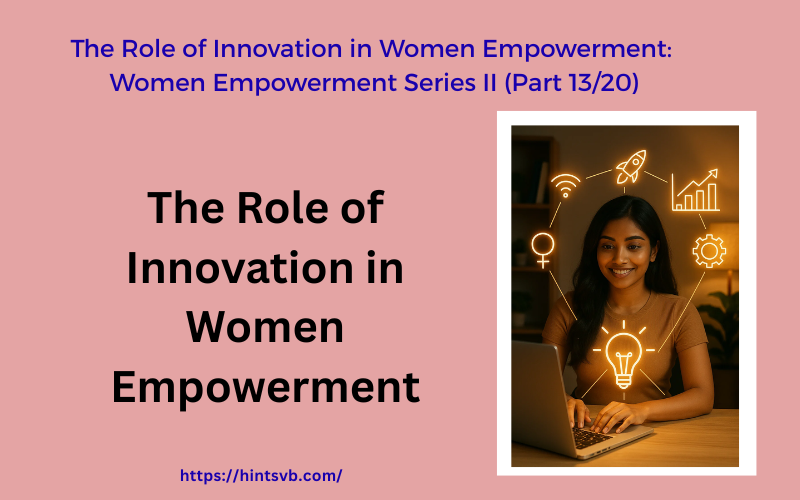
    The Role of Innovation in Women Empowerment 13

    Women Empowerment Series II | Part 13 of 20

    Introduction: Innovation as a Catalyst for Women Empowerment

    Innovation is often misunderstood as a synonym for technology alone. In reality, innovation is a mindset—a way of rethinking systems, processes, and opportunities to solve long-standing problems more effectively. When applied to social development, innovation becomes a powerful tool for inclusion, equity, and transformation. Few areas illustrate this more clearly than women empowerment.

    The Role of Innovation in Women Empowerment

    For decades, women across the world have faced structural barriers in education, employment, finance, health, and leadership. While legal reforms and social movements have made progress, change has often been slow and uneven. This is where innovation plays a decisive role. By redesigning access, lowering entry barriers, and creating alternative pathways, innovation enables women to participate, compete, and lead on more equal terms.

    The Role of Innovation in Women Empowerment lies in its ability to bypass traditional gatekeepers and create direct access to knowledge, markets, networks, and resources. From digital classrooms and mobile banking to remote work and online entrepreneurship, innovative solutions are reshaping how women learn, earn, and lead. This blog explores how innovation—especially technology-driven innovation—is transforming women’s lives, the challenges that remain, and why responsible innovation is essential for lasting gender equality.

    Historical Barriers Faced by Women and the Need for Innovation

    Historically, women have encountered systemic barriers that limited their personal and professional growth. Education gaps restricted skill development, employment discrimination curtailed economic independence, and limited access to finance kept women dependent on male-dominated systems. Cultural norms further reinforced these inequalities by defining rigid gender roles.

    Traditional solutions—such as policy declarations or isolated welfare schemes—often failed to address root causes. Many initiatives were top-down, slow-moving, and inaccessible to women in rural or marginalised communities. Even when opportunities existed, lack of information, mobility constraints, and social resistance prevented women from benefiting fully.

    This is where innovation for gender equality becomes essential. Innovative approaches challenge outdated models by offering flexible, scalable, and inclusive alternatives. Instead of waiting for institutions to change, innovation enables women to access opportunities directly. The Role of Innovation in Women Empowerment is not to replace social reform, but to accelerate it by bridging gaps that conventional systems could not.

    Technology as an Equalizer: Breaking Access Barriers

    Technology has emerged as one of the most powerful equalizers in modern society. The spread of the internet, affordable smartphones, and digital literacy initiatives has dramatically reduced information asymmetry. For women, especially in developing countries, this shift has been transformative.

    A woman in a rural village can now access government schemes, online education, digital payments, and global markets from her phone. Urban women benefit from flexible work arrangements, remote collaboration, and online professional networks. This contrast highlights the role of technology and women empowerment in narrowing, though not entirely eliminating, rural–urban divides.

    However, access alone is not enough. Digital literacy is critical. When women are trained to use technology confidently, it becomes a tool for self-reliance rather than dependency. The Role of Innovation in Women Empowerment is evident in how technology removes intermediaries, reduces discrimination, and gives women direct control over resources and information.

    Women Empowerment Through Digital Education Platforms

    Education has always been the foundation of empowerment, but traditional education systems often excluded women due to cost, distance, or social restrictions. Digital education platforms have changed this reality by making learning accessible, flexible, and affordable.

    Online courses, virtual classrooms, and mobile learning apps enable women to acquire new skills without leaving their homes. From basic literacy to advanced STEM subjects, digital platforms support continuous learning at every life stage. This has been especially impactful for women who paused their careers due to marriage or caregiving responsibilities.

    EdTech solutions promote digital empowerment of women by aligning education with market needs. Certifications in data analysis, coding, digital marketing, and financial management improve employability and career mobility. The Role of Innovation in Women Empowerment is clearly visible here: learning is no longer limited by geography, age, or social expectations.

    Innovation in Financial Inclusion for Women

    Financial independence is a cornerstone of empowerment. Yet, women have historically been excluded from formal financial systems due to lack of documentation, collateral, or financial literacy. Innovation in financial technology has begun to dismantle these barriers.

    Digital banking, mobile wallets, and micro-credit platforms allow women to save, borrow, and transact securely. FinTech solutions tailored for women entrepreneurs offer small loans without complex paperwork. Government-backed digital payment systems have further increased transparency and control over personal finances.

    By enabling direct access to financial tools, women empowerment through technology becomes tangible and measurable. Women who manage their own finances gain confidence, bargaining power, and decision-making authority within households and communities. The Role of Innovation in Women Empowerment lies in converting financial access into financial agency.

    Role of Innovation in Women Entrepreneurship

    Entrepreneurship has emerged as a powerful pathway for women’s economic empowerment. Innovation has lowered entry barriers by enabling low-capital, home-based, and digital-first business models. Women can now start enterprises without large investments or physical infrastructure.

    The Role of Innovation in Women Empowerment

    E-commerce platforms allow women to sell products nationally and globally. Social media enables branding, customer engagement, and marketing at minimal cost. The gig economy offers flexible income opportunities aligned with individual skills and schedules.

    These developments highlight the role of technology in women’s development, especially for first-generation entrepreneurs. Innovation reduces dependency on traditional supply chains and intermediaries, allowing women to retain greater control over profits and growth. The Role of Innovation in Women Empowerment is evident in how entrepreneurship shifts women from job-seekers to job-creators.

    Technology and Women’s Leadership Development

    Leadership has traditionally been shaped by physical presence, long working hours, and hierarchical networks—factors that often disadvantage women. Technology is redefining leadership by prioritising outcomes over visibility.

    Remote work, virtual collaboration tools, and AI-driven productivity platforms enable women to lead teams across geographies. Online mentorship programs connect aspiring women leaders with global role models. Data-driven performance metrics reduce subjective bias in evaluations.

    This shift supports tech-driven women leadership, where competence and results matter more than proximity to power. By democratising leadership pathways, The Role of Innovation in Women Empowerment becomes deeply structural, not merely symbolic.

    Innovation in Health, Safety, and Well-Being of Women

    Women’s health and safety directly influence their participation in education and employment. Innovation in healthcare and safety technology has significantly improved women’s quality of life.

    FemTech solutions address reproductive health, maternal care, and mental well-being through personalised digital tools. Telemedicine expands access to doctors, especially in underserved areas. Safety apps provide real-time location tracking and emergency alerts.

    These innovations strengthen innovation and gender inclusion by addressing vulnerabilities that disproportionately affect women. Improved health and safety enhance productivity, confidence, and long-term economic participation. The Role of Innovation in Women Empowerment extends beyond income—it supports dignity and well-being.

    Challenges and the Digital Gender Divide

    Despite progress, significant challenges remain. The digital gender divide persists due to unequal access to devices, connectivity, and digital skills. In some regions, cultural norms restrict women’s use of technology altogether.

    Bias in AI algorithms can reinforce stereotypes if not carefully designed. Affordability issues limit sustained access to digital tools. Cybersecurity threats and online harassment further discourage women’s participation.

    These challenges underline the need for inclusive design. Innovation for gender equality must be intentional, ethical, and context-sensitive. The Role of Innovation in Women Empowerment depends not only on creating tools, but on ensuring they are safe, accessible, and fair.

    Government, Corporate, and NGO Initiatives Driving Change

    Collaborative efforts between governments, corporations, and NGOs have accelerated innovation-led empowerment. Initiatives like Digital India and Skill India focus on digital access and skill development for women. Corporate diversity programs invest in leadership pipelines and inclusive workplaces.

    NGOs play a crucial role by reaching last-mile communities, providing training, and advocating for policy reform. Public–private partnerships combine scale with social sensitivity.

    Such collaboration strengthens technology and women empowerment by aligning resources, expertise, and intent. The Role of Innovation in Women Empowerment becomes sustainable when institutional support reinforces grassroots change.

    Measuring the Real Impact of Innovation on Women Empowerment

    True empowerment must be measurable. Metrics such as income growth, workforce participation, leadership representation, and financial inclusion provide tangible indicators of progress. Data-driven evaluation helps distinguish meaningful impact from token initiatives.

    Long-term sustainability matters more than short-term visibility. Programs must adapt based on feedback and outcomes. Avoiding tokenism requires listening to women’s experiences and integrating their perspectives into design and implementation.

    Here, The Role of Innovation in Women Empowerment is not just about speed, but about depth—ensuring that progress is real, inclusive, and lasting.

    Conclusion: The Future of Women Empowerment Lies in Responsible Innovation

    The future of gender equality will be shaped not only by laws, policies, and social movements, but also by how responsibly innovation is designed and deployed. Technology, when guided by empathy, ethics, and inclusivity, has the power to dismantle long-standing structural inequalities and open doors that were once firmly closed to women. However, innovation without intent can deepen divides just as easily as it can bridge them.

    The Role of Innovation in Women Empowerment is to expand choices, amplify voices, and create leadership opportunities at every level of society—whether in education, entrepreneurship, governance, or the workplace. For this potential to be fully realised, innovation must remain accessible, affordable, and conscious of bias. Policymakers need to frame regulations that encourage inclusion, businesses must design gender-sensitive technologies and workplaces, and communities should actively support women in adopting and shaping new tools.

    Equally important is accountability. Measuring real outcomes, listening to women’s lived experiences, and continuously improving systems are essential to ensure empowerment is meaningful rather than symbolic. As digital transformation accelerates, collaboration across sectors will determine whether progress is sustainable and equitable.

    As we move forward, The Role of Innovation in Women Empowerment will define whether gender equality evolves into a shared reality or remains an unfinished promise. The opportunity is immense, but the responsibility—to innovate with conscience and purpose—is truly collective.