Tag: unspoken truths

  • Identity | What We Don’t Say Out Loud – 5
    Identity | What We Don’t Say Out Loud – 5

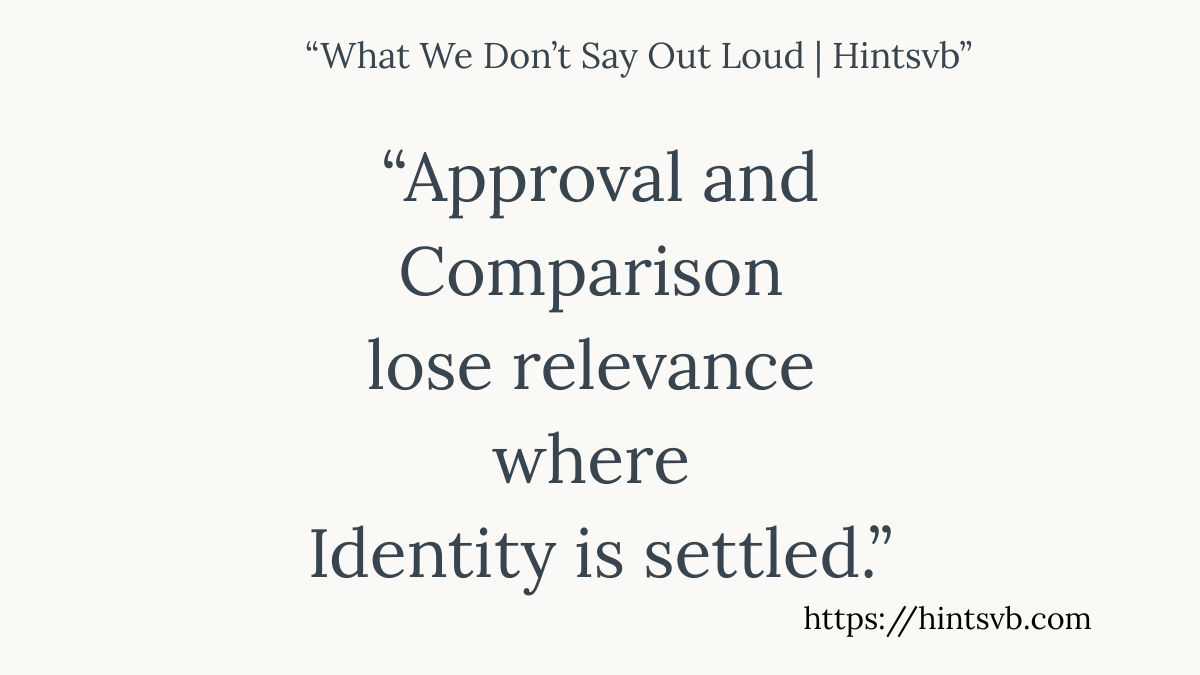
    “Approval and

    Comparison

    lose relevance

    where

    Identity is settled.”

    Identity

    The Reflection

    Social interaction often relies on external markers such as validation, ranking, and comparison. These mechanisms operate most visibly where identity remains fluid or contested. In stable roles and long-established positions, reliance on approval gradually declines as patterns become familiar. Comparison loses urgency once function and

    Identity

    boundaries are recognised within a system. Across institutions, families, and professional environments, clarity of role reshapes behaviour without overt negotiation. Where identity is settled through experience and continuity, external affirmation becomes less central to decision-making, interaction, and self-assessment over time.

    A Line to Sit With

    Approval and comparison recede as identity stabilises.
    Their influence varies with certainty of role.

    Identity
  • Judgment | What We Don’t Say Out Loud – 4
    Judgment | What We Don’t Say Out Loud – 4

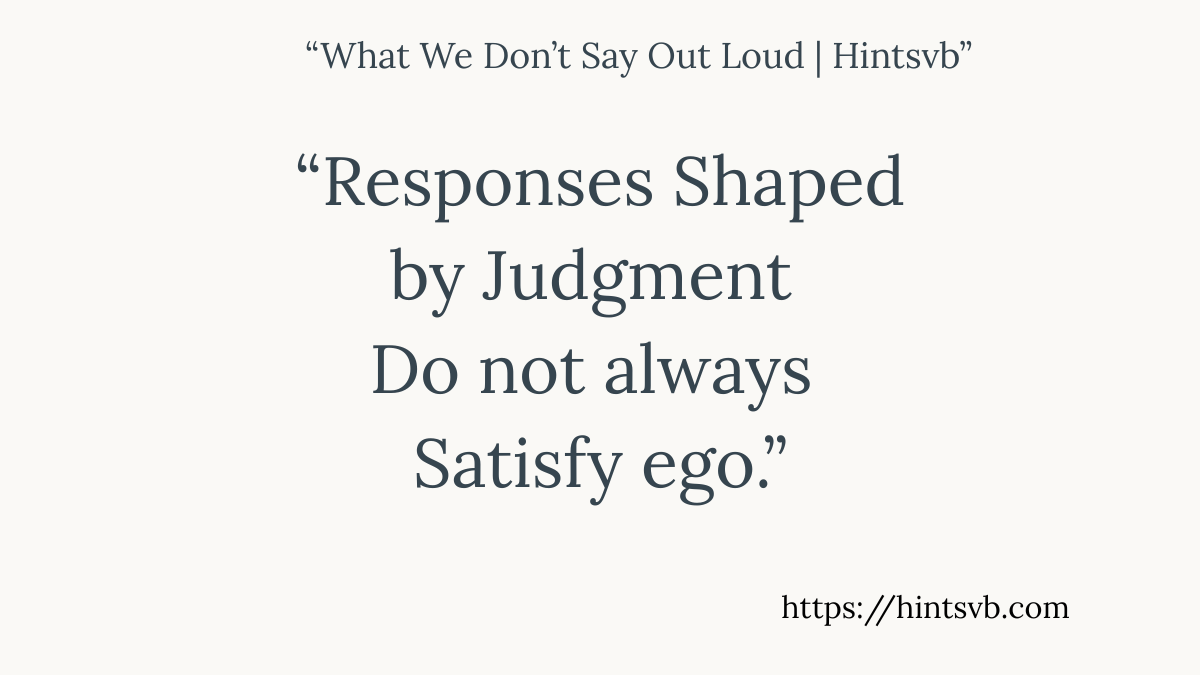
    “Responses

    Shaped by

    Judgment

    Do not always

    Satisfy ego.”

    Judgment

    The Reflection

    Responses within social and institutional settings are often filtered through judgment rather than impulse. Such responses prioritize assessment, context, and consequence over immediate affirmation. This approach can create friction where ego seeks validation or recognition. Over time, patterns emerge in which judgment governs decision-making, communication, and restraint. These patterns are visible in leadership, conflict resolution, and private interactions. The distance between judgment and ego is not accidental; it reflects differing functions within cognition and social order. Where ego seeks immediacy, deliberation operates through delay, comparison, and measured outcome over time.

    Judgment

    A Line to Sit With

    Assessment and ego rarely move in parallel.
    Their separation shapes restraint.

    Judgment