Tag: Self-Awareness

  • Empowered Women, Global Impact I Women Empowerment Series II  Part 6 of 20
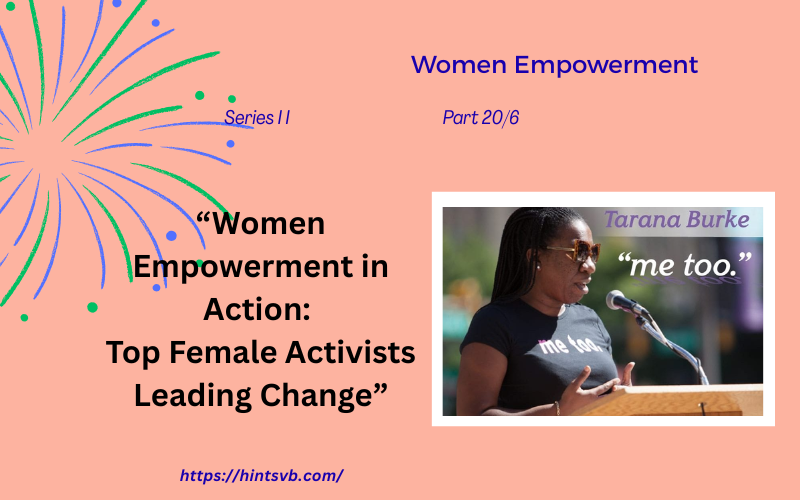
    Empowered Women, Global Impact I Women Empowerment Series II  Part 6 of 20

    Women Empowerment in Action: Top Female Activists Leading Change

    Introduction: The Rise of Women-Led Movements

    From grassroots campaigns to global stages, women are not just participating in change—they are leading it. Across every continent, women stand at the forefront of justice, equality, and transformation, proving that empowerment is not a borrowed concept but a lived reality. Their struggles and victories embody women empowerment, illustrating how resilience and courage can transform society.

    This blog shines a light on some of the most influential female activists whose voices and actions are reshaping the world. They are champions of justice who embody the essence of Social Impact & Activism—whether fighting for education, climate, human rights, or refugee advocacy. Their lives demonstrate that leadership is not about authority but about lifting others. Even in the face of threats, violence, or discrimination, these women persist, inspiring millions to join their cause.

    These leaders redefine empowerment by proving that personal difficulty can become a catalyst for broad systemic transformation. Their journeys embody the idea that pursuing justice can fuel a fulfilling and deeply Happy Life rooted in meaning, resilience, and service. By exploring their stories, we can better understand the power of women-led movements, the lessons they teach us about impact, and the role each of us can play in keeping momentum alive.

    Why Female Leadership in Activism Matters

    The Unique Power of Women’s Voices in Social Change

    Women bring distinct perspectives and approaches to activism that make their voices indispensable in social change movements. They are often more inclusive leaders who recognize the interconnectedness of struggles faced by marginalized groups. Studies conducted by the UN reveal that women-led movements are 34% more likely to sustain long-lasting change compared to male-led initiatives. This is because women often approach activism with a community-first mindset—a focus that ensures solutions are multidimensional and rooted in lived experience.

    Intersectionality in Activism

    Female activists rarely fight battles in isolation. Instead, their work acknowledges intersectionality—the way gender overlaps with race, class, culture, and environment. For example, a woman fighting for educational rights is also confronting issues tied to poverty, cultural norms, and generational opportunity. This layered understanding makes their fight more holistic and impactful.

    The Ripple Effect of Empowering Women

    One of the most remarkable aspects of women empowerment in activism is the ripple effect. When women attain leadership, they uplift communities around them. Research consistently shows that women invest more resources back into their families and neighbourhoods, broadening the community impact of their work. A girl with access to education, for instance, grows into a woman with the tools to spark social transformation. Activists like Malala Yousafzai are proof of how local struggles can grow into a powerful worldwide demand for justice.

    Women’s leadership therefore isn’t just necessary—it’s transformative. Every act of courage from an activist not only makes strides toward equality but also inspires the next generation to continue leading change.

    Top Female Activists Shaping the World

    Here are the profiles of six extraordinary women activists making a lasting difference in their fields of work.

    Malala Yousafzai – Education and Girls’ Rights


    Malala Yousafzai grew up in Pakistan’s Swat Valley, where education was under heavy restrictions by the Taliban. At just 11 years old, she started sharing her experience on a blog,

    women empowerment
    Malala Yousafzai became an international symbol of the fight for girls’ education

    advocating for girls’ right to education. Her boldness attracted global attention, but it also placed her life in danger. In 2012, she narrowly survived an assassination attempt, which only amplified her voice.

    Achievements:

    • Nobel Peace Prize laureate (youngest ever at 17).
    • Co-founder of the Malala Fund, supporting girls’ education in over 20 countries.
    • Influenced global policy discussions about gender-based inequalities in education.

    Philosophy:
    Malala believes that education is not just a right but a tool of liberation. Her activism embodies how Social Impact & Activism can create systemic change.

    “All of us must do what we can. That is the way history is made.”

    Greta Thunberg – Climate Justice Advocate

    women empowerment
    Greta Thunberg is a Swedish climate activist known for founding the Fridays for Future school strike movement

    Greta Thunberg started alone with a modest protest outside the Swedish Parliament, demanding urgent climate action. While many dismissed her, her determination sparked the Fridays for Future movement, inspiring millions of young people worldwide to strike for climate justice.

    Achievements:

    • Became the face of youth-led climate protests globally.
    • Addressed world leaders at the United Nations and World Economic Forum.
    • Influenced international discussions on reducing carbon emissions and accountability.

    Philosophy:
    Greta insists on speaking truth to power, urging political and corporate leaders to close the gap between words and actions in environmental policy.

     “You are never too small to make a difference.”

    Tarana Burke – Founder of the MeToo Movement

    women empowerment

    Long before #MeToo became a viral digital campaign, Tarana Burke was already focusing on healing for sexual assault survivors. Growing up in New York, she understood how survivors—especially in marginalized communities—often lacked support. Her work laid the foundation for a cultural reckoning against harassment and abuse.

    Achievements:

    • Founder of the original MeToo Movement.
    • Brought global attention to systemic abuses of power and gender-based violence.
    • Recognized by TIME among the 100 Most Influential People.

    Philosophy:
    Burke’s activism highlights healing and solidarity. She emphasizes that shared experiences build collective power.

     “Me too. Two simple words that have power to heal.”

    Nadia Murad – Survivor Advocate and Human Rights Activist

    women empowerment
    Human rights activist and recipient of the 2018 Nobel Peace Prize, Nadia Murad is a leading advocate for survivors of genocide and sexual violence.

    Nadia Murad is a Yazidi survivor of ISIS captivity who endured horrific violence. Instead of retreating into silence, she dedicated her life to advocating for survivors of sexual violence in conflict zones, ensuring the international community could not ignore these crimes.

    Achievements:

    • Nobel Peace Prize laureate in 2018.
    • Founder of Nadia’s Initiative, rebuilding communities in post-war Iraq.
    • Instrumental in pushing the UN to acknowledge sexual violence as a weapon of war.

    Philosophy:
    Nadia advocates for justice not only as punishment but also as a form of healing for survivors. Her resilience demonstrates the potential for trauma to be transformed into a force of global leadership.

     “Don’t let this happen to another girl.”

    Jane Goodall – Conservation and Environmental Activist

    women empowerment

    Jane Goodall redefined humanity’s understanding of animals through her research on chimpanzees in Tanzania. But beyond her scientific career, she emerged as a leading voice for wildlife conservation and environmental sustainability, becoming an inspiration far beyond the scientific community.

    Achievements:

    • Founded the Jane Goodall Institute and Roots & Shoots, empowering young people worldwide.
    • Influential in biodiversity conservation and climate activism.
    • Awarded countless honours for her humanitarian and environmental contributions.

    Philosophy:
    Jane combines scientific brilliance with a strong ethical message: humans are deeply interconnected with the natural world, and protecting it is not optional.

     “Every individual matters. Every individual has a role to play.”

    Halima Aden – Humanitarian and Refugee Advocate

    women empowerment

    Halima Aden was born in a refugee camp in Kenya and rose to international recognition as the first hijab-wearing model in the fashion industry. But beyond breaking stereotypes, she has devoted her platform to uplifting refugee stories and advocating for humanitarian aid.

    Achievements:

    • UNICEF Goodwill Ambassador advocating for refugees.
    • First hijab-wearing model to appear in major fashion campaigns and magazines.
    • A strong public voice for inclusivity, culture, and dignity.

    Philosophy:
    Halima’s activism blends representation in media with a deeper commitment to humanitarian causes, making her a beacon of modern women empowerment.

     “Don’t change yourself. Change the standards.”

    The Personal Side: Activism and a Happy Life

    Can Fighting for Change Lead to Happiness?

    Many assume activism is only sacrifice and tension, but for these women, activism is also about joy and fulfillment. When your life aligns with your values, you embody a deeper sense of purpose—and this leads to a truly Happy Life.

    Purpose-driven joy is at the heart of activism. Studies show that individuals engaged in altruistic work report higher levels of life satisfaction. By advocating for justice, many women experience a sense of accomplishment, connection, and hope. Even in the face of setbacks, the resilience built through activism contributes to personal growth and emotional strength.

    Balancing activism with self-care is essential. Many female leaders prioritize routines like meditation, community support, or periodic retreats to restore their mental health. They openly discuss burnout and advocate for sustainable activism strategies—showing that caring for oneself is not selfish, but necessary for long-term impact.

    Community is another cornerstone. Solidarity with fellow activists offers emotional reinforcement. Shared struggles and victories build relationships that provide comfort and strength. This collective energy reinforces a sense of belonging and purpose, reminding them that they are not alone.

    These women prove that a Happy Life isn’t about avoiding hardship—it’s about embracing challenges that matter. Their stories teach us that happiness is possible even in struggle because a life of activism is a life of meaning.

    How to Support Women-Led Movements

    Supporting women-led movements is essential for advancing women empowerment and creating sustainable social change. While the frontline activists play a crucial role in spearheading campaigns and driving policy reform, the contributions of supporters and allies are equally vital in sustaining momentum and amplifying impact. If you are inspired to participate in Social Impact & Activism, there are many meaningful ways to contribute—even without being in the spotlight.

    One of the simplest yet most powerful ways to support women activists is through amplification. Using social media platforms to share their stories, campaigns, and messages increases visibility and creates a ripple effect that can amplify their influence globally. Every post, tweet, or share helps their cause reach new audiences and mobilize more allies.

    Financial support is another impactful avenue. Donations, no matter the amount, fund grassroots organizations like the Malala Fund and Nadia’s Initiative, helping them reach more beneficiaries and expand their programs. Fundraising events or campaigns can further boost resources and community engagement around these causes.

    Volunteering your time and skills also makes a significant difference. Whether helping organize events, providing administrative support, or offering specialized skills like marketing, translation, or legal advice, volunteers form the backbone of many social justice organizations.

    Education plays a critical role as well. Engaging with and sharing literature, documentaries, and seminars about women activists and their causes helps deepen understanding and fosters empathy. Spreading awareness in your local networks encourages informed conversations and inspires collective action.

    Finally, change often starts locally. Advocating for gender equality and social justice in communities through workshops, campaigns, and partnerships builds the foundation for broader societal transformation. Supporting women-led movements is therefore about transforming admiration into active women empowerment that fuels lasting progress for everyone.

    Conclusion: Your Turn to Lead

    The legacies of Malala, Greta, Tarana, Nadia, Jane, and Halima illustrate the limitless ways women can lead change. Their stories show us that resilience and courage are contagious. These women prove that activism is a powerful force for social transformation. They embody the true spirit of women empowerment. Their leadership is not about holding power but about lifting others. They guide us toward freedom, equality, and dignity for all.

    Their journeys inspire us to believe in our own potential to make a difference. You don’t need to be on a global platform to create impact. Small acts like mentorship, advocacy, or educating others hold great power. Every action contributes to a larger movement for justice. Empowerment starts with belief. It grows through consistent action. Most importantly, it thrives in community.

    Now, it is our turn to step up. We can carry forward their legacy by using our voices and supporting others. Share which activist inspires you the most. Tag a woman in your life who is making a difference. Remember, every voice counts. Together, we can create waves of change. True women empowerment means not just passing the mic but joining the chorus of voices demanding a better world.

    By embracing this mindset, we contribute to lasting Social Impact & Activism and a life filled with purpose and happiness.

  • Silent Regret and Path to Healing – Dil Se Poochein  Emotional Wellness Series I Part 8 of 10

    Silent Regret and Path to Healing – Dil Se Poochein Emotional Wellness Series I Part 8 of 10

    What If They Never Knew I Loved Them? Dil Se Poochein the Silent Regret and Path to Healing

    Introduction

    Have you ever sat quietly at night, staring at the ceiling, asking yourself, “What if they never knew I loved them?” That haunting question creeps into our thoughts, long after the moment has passed. Maybe it was a friend you cherished, a family member you admired, or someone whose smile lingered in your mind for days. But you never said it. You never acted on the feeling. Now, you wonder—did they ever suspect? Did they ever feel it without words? In such moments, it’s important to dil se poochein—ask your heart what it truly needs.

    Is it closure, forgiveness, or simply the courage to love without fear? Listening to your heart can guide you toward healing and help you transform regret into strength.

    Dil Se Poochein

    Unexpressed love is one of the most profound emotional burdens we carry. It shapes how we see ourselves, how we relate to others, and how we navigate relationships. This silent regret can weigh on the heart, clouding judgment, affecting self-worth, and holding us back from emotional wellness.

    In this article, we’ll explore why people hide feelings, the fear of confessing love, and the consequences of hidden love—not just for ourselves but for those we care about. More importantly, we’ll look at how to heal unspoken love, turn regret into strength, and open the door to a fuller, more courageous life. Let’s reflect, together, and ask—dil se poochein—what our heart truly needs to find peace.

    What Happens to People Who Were Never Loved? (The Foundation)

    When love is absent—or unexpressed—it leaves more than a gap in our hearts. It leaves an imprint on our psyche and our relationships. For those who grew up feeling unseen or emotionally distant, love wasn’t something freely given or received. Many adults carry forward the effects of such deprivation, whether they grew up in a strict household where emotions were discouraged or in environments where survival came before affection. In such times, it’s important to dil se poochein—ask your heart what it truly needs to feel safe and connected.

    Psychologists explain that the lack of expressed love can lead to attachment issues. Children who didn’t receive warmth may develop avoidant or anxious attachment styles as adults, struggling to trust others or fearing abandonment. They often wrestle with self-worth, believing they are unlovable or undeserving of care. If you find yourself stuck in these patterns, take a moment to dil se poochein and explore what old wounds need compassion and healing.

    But it’s not only about the person who never received love—it’s about the person who never expressed it, too. When we hold back, our relationships remain surface-level, lacking depth, trust, and intimacy. We deny others the chance to feel cherished and supported. The cost isn’t just emotional—it’s relational, psychological, and spiritual. So pause and dil se poochein whether fear or pride is standing in the way of opening your heart fully.

    Understanding this foundation is critical. Love unspoken can be a double-edged sword: protecting us from pain in the moment, yet depriving both parties of connection. When we recognize this, compassion for ourselves and others begins to bloom. In those quiet moments of reflection, dil se poochein what barriers you’ve built—and how you can gently dismantle them to invite love, trust, and connection into your life.

    Why We Hold Back: The Anatomy of Silence

    Why do we hold back from confessing love, even when it feels so natural? The answer lies deep within our fears, conditioning, and insecurities.

    Fear of Rejection

    Dil Se Poochein

    At its core, fear of confessing love is rooted in primal survival instincts. Vulnerability feels dangerous, and rejection feels like abandonment—not just emotionally but existentially. If someone doesn’t return our affection, we fear that connection itself might dissolve. So we retreat into silence, convincing ourselves that saying nothing is safer.

    The Tyranny of Timing

    We often wait for the perfect moment—when circumstances are ideal, when we feel ready, when life is less complicated. But this tyranny of timing is a trap. Days turn into months, and months into years, while our feelings remain bottled up. The longer we wait, the harder it becomes to express them honestly.

    Insecurities and Self-Doubt

    “I’m not good enough.” “They probably don’t feel the same.” These thoughts create an internal narrative that convinces us that love is a privilege we don’t deserve. Our fear of embarrassment or rejection distorts reality, making love seem impossible rather than probable.

    Cultural and Familial Conditioning

    In many societies, open discussions about love and vulnerability are discouraged. Emotional restraint is praised, and expressions of affection are seen as weakness. Children raised in such environments grow up conditioned to hide their emotions—not because they lack love but because they fear judgment, shame, or ridicule.

    Understanding why people hide feelings helps us release the harsh self-criticism that often accompanies this silence. It’s not a flaw—it’s a human reaction to protect oneself.

    The Cost of Silence: Living with “What If?”

    Silence may seem like a temporary shield, but over time, it becomes a heavy stone sitting on the heart.

    The Burden of Regret

    Living with unexpressed love means living with the constant thought: “What if I had told them?” This question loops endlessly, creating anxiety, sadness, and a sense of loss for something that never fully existed.

    Missed Opportunities

    We construct entire alternate realities in our minds—stories where we confessed love, where the other person reciprocated, and where life took a different path. These imagined worlds are powerful, but they trap us in nostalgia and longing for something that can’t be verified or reclaimed.

    Emotional Stagnation

    When regret is held onto, it blocks the flow of new relationships. We fear opening up again, worried that history will repeat itself. Emotional stagnation develops, preventing us from experiencing connection in the present.

    The Myth of “Love in Silence”

    Many romanticize silent love as noble or pure. While it’s true that unselfish love holds beauty, clinging to silence as a way to avoid pain is often self-sabotaging. Love thrives in communication, not concealment. Without sharing, love stagnates and festers, rather than nourishing both people involved.

    Acknowledging the cost of silence is the first step in healing it.

    What Happens If They Never Knew? The Ripple Effect

    So, what happens if the person we loved never knew?

    On Relationships

    The fear of rejection can morph into a pattern of withholding emotions, making it harder to form authentic connections. We become guarded, avoiding intimacy out of self-protection.

    On Inner Peace

    The lack of closure festers. We may carry sadness or anxiety for years without knowing why. This quiet unrest is emotionally exhausting, keeping us disconnected from ourselves.

    On Life Narrative

    The story of unexpressed love becomes a defining chapter in our lives. We may repeatedly frame ourselves as unlucky or flawed, embedding the regret into our identity rather than allowing it to be a passing experience.

    Yet, asking this question gently—“What if they never knew?”—can also guide us toward awareness. It invites us to face our feelings rather than bury them, creating space for healing and compassion.

    The Signs They Might Have Known Anyway: The Unspoken Language

    Even if we never confessed love, that doesn’t mean the other person never sensed it.

    Body Language

    Subtle, unconscious behaviors often reveal what words do not. A lingering glance, slight changes in posture, or a softened expression when speaking with you are all signals that love was perceived without a word.

    Subtle Signals

    The tone reserved for you, the way someone prioritizes your needs, or the energy shared during interactions can all convey unspoken affection. Human connection thrives on intuition, and love doesn’t need constant verbal validation to be felt.

    The Unspoken Connection

    Have you ever felt understood without explaining yourself? That shared silence, that comfort in each other’s presence—it’s a bond rooted in something deeper than spoken love. It may very well be that they knew, in some form, without words.

    Recognizing these signs brings comfort. Love transcends language and can live quietly in gestures, expressions, and the spaces between conversations.

    How to Heal From the Weight of Unexpressed Love

    Healing unspoken love requires gentleness, courage, and self-compassion.

    Radical Self-Acceptance

    First, acknowledge your feelings without judgment. You did the best you could with the emotional tools you had at the time. Instead of criticizing yourself, offer kindness. Understand that vulnerability is not weakness—it’s bravery in disguise. Take a quiet moment and dil se poochein what you need to feel safe and supported in this process.

    Finding Closure Without Them

    Closure doesn’t always require the other person’s response. Writing an unsent letter, journaling your thoughts, or using visualization techniques can help you process emotions. Talking to a therapist or trusted friend offers another layer of support. As you explore these steps, dil se poochein how you can honor your feelings while freeing yourself from past burdens.

    Understanding the Psychology of One-Sided Love

    Recognize that much of the longing comes from an idealized version of the person. The fantasy we create often outweighs the reality of what might have been. Learning to disentangle the imagined from the real helps in finding peace. When confusion arises, dil se poochein what your heart truly desires and what it needs to heal.

    Moving Forward

    The goal isn’t to erase love but to integrate it. Decide that this chapter will not dictate your future relationships. Commit to being more open, honest, and emotionally available, even when it feels uncomfortable.

    Healing unspoken love is a courageous journey—and every step, however small, brings you closer to emotional wellness. By gently listening to yourself and asking, dil se poochein, you allow healing to begin from within.

    Turning Regret Into Growth: Five Paths Forward

    Regret can either trap us or transform us. Here are five lessons that can guide you:

    1. Lesson in Courage
      The experience teaches you bravery with your emotions. Next time, you may be more willing to share your heart.
    2. Lesson in Self-Discovery
      You learn what truly matters in connection and what values guide your relationships.
    3. Lesson in Presence
      You begin to appreciate and express love for those in your life now, rather than waiting for the perfect moment.
    4. Lesson in Compassion
      You develop empathy—not only for yourself but for others who struggle with vulnerability.
    5. Lesson in Imperfection
      It reminds you that humans are inherently flawed and that love doesn’t need to be perfect to be meaningful.

    As you reflect on these lessons, ask yourself—dil se poochein, what does my heart need to feel peace today? Our unexpressed loves are not burdens to carry but teachers urging us toward growth, courage, and emotional wellness.

    Dil Se Poochein

    Let your regret fuel compassion, connection, and self-understanding. You are not defined by the love you kept hidden—you are defined by the love you choose to express, today and every day forward.

    Conclusion : Final Thoughts

    What if they never knew you loved them? It’s a question that haunts many but need not imprison you. By understanding the psychology behind silence, recognizing the ripple effects of regret, and embracing healing practices, you can turn past wounds into future strength.

    Ask your heart gently—dil se poochein—what it truly needs. Whether that’s forgiveness, closure, or courage, the path forward is available to you. The love you held inside is not lost; it’s waiting to guide you toward a more compassionate, empowered, and emotionally well life.

    Let your story be one of growth, resilience, and the quiet beauty of a heart that dared to love—even if it spoke in silence.