Tag: Dil Se Poochein

  • Emotional Pressure from Family for Marriage | I Can’t Marry for Family Honour – My Heart’s Not In It (Part 3)

    Emotional Pressure from Family for Marriage | I Can’t Marry for Family Honour – My Heart’s Not In It (Part 3)

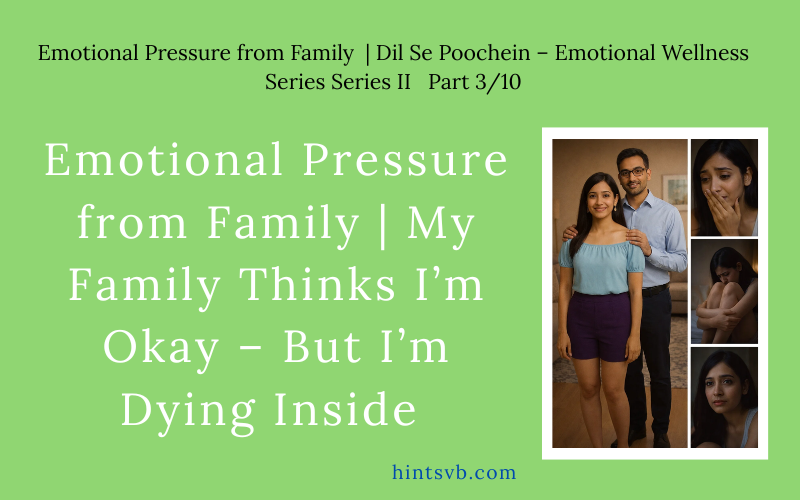
    Dil Se Poochein – Emotional Wellness Series II (Part 3/10)

    When Family Expectations Decide Your Love Life

    When Marriage Becomes a Family Decision

    In many households, marriage is no longer seen as a personal choice. It becomes a collective decision shaped by tradition, reputation, and social image. Emotional pressure from family for marriage begins quietly, often wrapped in concern and cultural values. What starts as casual discussion slowly turns into expectation. Family honour marriage pressure influences conversations, timelines, and emotional responses.

    Emotional pressure from family for marriage

    Mental health in families is rarely considered during these discussions. The emotional readiness of the individual becomes secondary to social approval. Silent emotional struggle grows when personal feelings remain unspoken. Love vs family duty becomes an internal conflict that stays hidden behind respectful silence.

    Feeling trapped by expectations becomes a familiar emotion. The idea of marriage without emotional readiness feels heavy, yet difficult to express. Emotional wellness takes a back seat to family reputation.

    The Dil Se Poochein series reflects how emotional pressure from family for marriage reshapes personal choices into social responsibilities, often without visible resistance but with deep emotional weight.

    Family Honour vs Personal Feelings

    Family honour carries emotional weight in traditional settings. Decisions are rarely individual; they represent the family’s image. Emotional pressure from family for marriage increases when honour becomes the main reason for commitment. Personal feelings are expected to adjust.

    Family honour marriage pressure often overshadows emotional reality. The idea of love vs family duty becomes a silent struggle. Mental health in families is not part of the conversation. Emotional conflict in relationships remains internal.

    Marriage without emotional readiness feels like fulfilling a role rather than following the heart. Silent emotional struggle grows when personal emotions are suppressed. Feeling trapped by expectations becomes normal.

    Emotional wellness remains personal and unspoken. The Dil Se Poochein series captures how emotional pressure from family for marriage transforms emotional hesitation into quiet acceptance, where personal desires fade into family expectations.

    The Unspoken Pressure to Say Yes

    Pressure does not always come through force. Often, it arrives through repeated hints, emotional reminders, and silent expectations. Emotional pressure from family for marriage builds gradually.

    Parental pressure for marriage appears as concern, but carries emotional weight. Family honour marriage pressure shapes responses. Saying “no” feels heavier than saying “yes.”

    Silent emotional struggle continues when emotional conflict in relationships is hidden. Mental health in families remains unaddressed. Feeling trapped by expectations becomes part of daily emotional life.

    Marriage without emotional readiness feels like a compromise rather than a choice. Emotional wellness stays personal.

    The Dil Se Poochein series reflects how emotional pressure from family for marriage does not always demand obedience — it creates emotional environments where agreement feels inevitable.

    Love That Doesn’t Fit Expectations

    Love does not always align with family ideals. Emotional pressure from family for marriage increases when personal relationships don’t meet traditional standards.

    Family honour marriage pressure reshapes emotional responses. Love vs family duty becomes a silent emotional battle. Emotional conflict in relationships remains unspoken.

    Mental health in families is rarely considered. Silent emotional struggle grows when feelings are dismissed. Feeling trapped by expectations becomes emotionally exhausting.

    Marriage without emotional readiness feels distant from the heart. Emotional wellness becomes secondary to social acceptance.

    The Dil Se Poochein series highlights how emotional pressure from family for marriage often forces individuals to emotionally disconnect from their own feelings to maintain harmony.

    Living Someone Else’s Dream

    Many individuals find themselves living the future others have planned for them. Emotional pressure from family for marriage turns personal life into a shared project.

    Parental pressure for marriage defines timelines. Family honour marriage pressure shapes decisions. Silent emotional struggle becomes routine.

    Mental health in families remains a background concern. Emotional conflict in relationships stays hidden. Feeling trapped by expectations becomes part of identity.

    Marriage without emotional readiness feels like fulfilling responsibility rather than desire. Emotional wellness remains personal and unspoken.

    The Dil Se Poochein series reflects how emotional pressure from family for marriage transforms dreams into duties, shaping lives without emotional alignment.

    Silent Emotional Struggle at Home

    Homes can be emotionally loud yet emotionally silent at the same time. Conversations may be constant, but true emotional expression often remains missing. Emotional pressure from family for marriage creates environments where feelings stay unspoken and personal emotions are quietly suppressed. Family honour marriage pressure influences daily discussions, shaping expectations without directly addressing emotional realities. Emotional conflict in relationships remains private, hidden behind routine interactions and social roles. Silent emotional struggle continues unnoticed because everything appears normal on the surface.

    Mental health in families is rarely addressed openly, making emotional discomfort feel like a personal burden rather than a shared experience. Feeling trapped by expectations becomes an emotional routine, accepted without question. Marriage without emotional readiness feels like emotional distance rather than emotional connection. Emotional wellness stays personal, quiet, and unseen.

    The Dil Se Poochein series captures how emotional pressure from family for marriage slowly turns emotional expression into quiet endurance, where feelings exist, but voices remain silent.

    Marriage Without Emotional Connection

    Marriage without emotional readiness often feels like a social contract rather than an emotional bond. Emotional pressure from family for marriage reshapes the meaning of commitment, turning it into an obligation rather than a personal choice. Family honour marriage pressure prioritizes public image over private feelings, making appearance more important than emotional truth. Love vs family duty becomes an internal conflict that remains unspoken, while silent emotional struggle deepens beneath routine interactions.

    Mental health in families remains secondary to tradition and expectation. Emotional discomfort is rarely acknowledged, and feeling trapped by expectations becomes emotionally heavy over time. Marriage without emotional readiness creates emotional distance instead of connection, leaving individuals to navigate their feelings privately. Emotional wellness becomes a personal experience, hidden behind social roles and responsibilities.

    The Dil Se Poochein series reflects how emotional pressure from family for marriage slowly transforms emotional connection into social responsibility, where commitment exists, but emotional closeness feels absent.

    Fear of Disappointing Loved Ones

    Fear often shapes decisions more strongly than desire. Emotional pressure from family for marriage creates emotional hesitation, where personal feelings are quietly set aside. Parental pressure for marriage influences emotional responses, while family honour marriage pressure encourages silence over expression. Saying “yes” feels easier than explaining emotional resistance.

    Silent emotional struggle continues beneath polite conversations and social expectations. Mental health in families remains unspoken, and emotional discomfort becomes a private experience. Feeling trapped by expectations starts to feel normal, accepted as part of responsibility. Marriage without emotional readiness feels emotionally distant, lacking personal connection. Emotional wellness stays private, hidden behind obedience and social approval.

    The Dil Se Poochein series shows how emotional pressure from family for marriage turns fear into acceptance, where emotional hesitation fades into quiet compliance, and personal emotions remain unexpressed.

    Emotional Conflict in Relationships

    Relationships shaped by pressure often feel emotionally divided. Emotional pressure from family for marriage creates emotional conflict in relationships, where personal feelings struggle against social expectations. Family honour marriage pressure overshadows emotional clarity, making love vs family duty a constant internal tension.

    Mental health in families remains ignored when emotional struggles are seen as personal issues. Silent emotional struggle continues behind routine interactions and polite behaviour. Feeling trapped by expectations becomes emotional reality, shaping how relationships are experienced. Emotional wellness stays personal, rarely shared or discussed.

    The Dil Se Poochein series reflects how emotional pressure from family for marriage complicates emotional connection, turning relationships into spaces of quiet conflict rather than emotional comfort, where feelings exist but remain emotionally restrained.

    Smiling Through Inner Resistance

    Smiles often hide emotional resistance. Emotional pressure from family for marriage encourages emotional performance, where outward calm masks inner hesitation. Family honour marriage pressure normalizes emotional compromise, making silent emotional struggle feel acceptable.

    Mental health in families stays unnoticed when emotions are expressed only through behaviour, not words. Feeling trapped by expectations becomes an emotional routine, carried quietly without visible protest. Marriage without emotional readiness feels distant, shaped more by responsibility than personal desire. Emotional wellness remains private, hidden behind social roles.

    The Dil Se Poochein series captures how emotional pressure from family for marriage turns emotions into silent endurance, where smiles replace honesty and emotional resistance remains unseen.

    The Weight of Cultural Expectations

    Culture shapes emotional choices long before personal preferences are considered. Emotional pressure from family for marriage strengthens through tradition, reinforcing social expectations. Family honour marriage pressure defines emotional roles, shaping how individuals respond to marriage decisions. Silent emotional struggle grows when cultural norms outweigh personal feelings.

    Mental health in families remains a background concern, rarely discussed openly. Feeling trapped by expectations becomes emotional identity, accepted as part of cultural responsibility. Emotional wellness remains personal, separate from collective values.

    The Dil Se Poochein series shows how emotional pressure from family for marriage carries cultural weight, shaping emotional behaviour through tradition, where personal emotions adapt quietly to long-standing expectations.

    Conclusion: Choosing Silence Over Desire

    Many individuals choose silence over emotional expression, not because they lack feelings, but because emotional pressure from family for marriage shapes how emotions are shown. Family honour marriage pressure continues quietly, influencing decisions without open discussion. Silent emotional struggle becomes routine, blending into everyday life where personal emotions remain unspoken.

    Emotional pressure from family for marriage

    Mental health in families stays unaddressed, making emotional discomfort feel like a private burden rather than a shared experience. Feeling trapped by expectations becomes emotional reality, accepted as part of responsibility. Marriage without emotional readiness feels emotionally distant, more like fulfilling a role than following the heart. Emotional wellness remains personal, hidden behind social approval and family expectations.

    The Dil Se Poochein series reflects how emotional pressure from family for marriage feels heavy, persistent, and deeply personal. It exists without loud conflict, yet leaves a deep emotional impact on those who carry their feelings quietly.

  • They Don’t Approve of My Love | Dil Se Poochein – Emotional Wellness Series Series II  Part 2/10

    They Don’t Approve of My Love | Dil Se Poochein – Emotional Wellness Series Series II  Part 2/10

    They Don’t Approve of My Love… Should I Fight or Let Go?

    Introduction — When Love Meets Resistance

    They don’t approve of my love

    Loving someone should feel safe. It should feel like home.
    But for many people, love becomes the most confusing place to stand when family refuses to accept it.

    If you are quietly thinking,
    They don’t approve of my love… what am I supposed to do?”
    you are not alone.

    This situation is not rare. It happens across cultures, families, and generations—especially where relationships are seen not just as personal choices, but as family decisions. When love is questioned, judged, or rejected by parents or relatives, the heart enters a storm of doubt, guilt, and loneliness.

    This blog is not here to tell you what decision to make.
    It is here to help you understand what you are feeling, why it hurts so deeply, and how to move toward clarity without breaking yourself inside.

    Because sometimes the real question is not fight or let go
    it is how to stay emotionally whole while deciding.

    When Love Faces Rejection

    Loving someone is one of the most human experiences. It brings warmth, hope, and a sense of belonging. But when love meets rejection—not from strangers, but from family—it turns into something painfully complex.

    Many people find themselves silently asking:
    “They don’t approve of my love… what do I do now?”

    This rejection doesn’t always come with loud arguments. Sometimes it arrives quietly—in uncomfortable silences, in forced smiles, in phrases like “You’ll understand later” or “This is not right for you.” Suddenly, love feels like a mistake instead of a blessing.

    When family opposition to a relationship enters the picture, love stops being simple. It becomes heavy. Confusing. Lonely. You start questioning your feelings, your choices, and even your worth. This is where emotional confusion in love begins—not because love is wrong, but because it is no longer supported.

    This blog is for anyone standing in that storm—torn between heart and home, love and loyalty, hope and fear.

    “They Don’t Approve of My Love” — Why It Hurts So Deeply

    Rejection hurts—but rejection from loved ones cuts deeper.

    When people you trust say no to your love, it feels like they are rejecting a part of you. Your feelings. Your choices. Your identity. That is why the thought “they don’t approve of my love” feels heavier than ordinary heartbreak.

    Family approval is often tied to safety and belonging. Since childhood, we are conditioned to believe that family knows what’s best. So when they oppose your relationship, the pain isn’t just emotional—it’s existential. You begin to wonder:

    • Is my love wrong?
    • Am I being irresponsible?
    • Why can’t they see what I see?

    This internal conflict intensifies emotional pain in relationships. Love, which once felt secure, now feels fragile. Every disagreement at home echoes inside your heart, creating doubt and guilt.

    This pain is not weakness. It is the cost of caring deeply—about love and about family.

    The Loneliness No One Sees

    One of the hardest parts of this journey is loneliness in relationships. It is quiet, invisible, and deeply exhausting. From the outside, people assume you are not alone. You have a partner. You have parents. You have friends. Yet inside, there is a growing sense of isolation that words fail to explain.

    When they don’t approve of my love, conversations begin to change. You stop speaking freely. You start choosing silence over honesty. Every sentence is measured. Every emotion is filtered. You hide your feelings not because they are wrong, but because keeping peace feels safer than expressing truth.

    Slowly, you begin feeling alone in love. You cannot fully lean on your partner because the future feels uncertain. You cannot confide in your family because they are part of the conflict. This emotional gap leaves you standing in the middle, unsupported from both sides.

    This isolation creates mental and emotional fatigue. You carry expectations that are not yours. Nights become restless as thoughts repeat without resolution. The heart feels heavy, unheard, and constantly alert. Loneliness like this is not about physical absence. It is about emotional absence.

    When they don’t approve of my love, this hidden loneliness slowly erodes emotional wellbeing in relationships, unless it is acknowledged and gently addressed.

    Emotional Confusion: Fight or Let Go?

    At some point, the question becomes unavoidable:
    Should I fight for this love… or should I let go?

    This is where relationship uncertainty peaks.

    Fighting feels brave—but exhausting. Letting go feels peaceful—but heartbreaking. Both choices hurt in different ways.

    You want to hold on because love feels real. But you also want relief—from conflict, guilt, and constant pressure. This tug-of-war creates emotional confusion in love.

    You may find yourself swinging between hope and despair:

    • One day you believe love will win.
    • The next day you feel tired of fighting alone.

    There is no clarity here—only emotional overload. And that’s why this decision feels so heavy. Because it’s not about choosing happiness over sadness. It’s about choosing which pain you can live with.

    Why Approval Matters More Than We Admit

    Many people say, “If you love each other, approval shouldn’t matter.”
    But that’s not always true.

    Approval matters because humans are wired for belonging. Family approval offers validation, safety, and acceptance. Without it, love often feels incomplete—even if it is genuine.

    When love vs family approval becomes a conflict, you don’t just fear losing people—you fear losing your place in the world. You worry about being seen as disobedient, selfish, or ungrateful.

    This fear is powerful. It influences decisions silently. It fuels heartbreak due to family pressure and keeps people stuck between compliance and resistance.

    Wanting approval does not make you weak. It makes you human.

    Is This Love Giving You Strength or Draining You?

    This is a crucial moment for reflection.

    Ask yourself gently:

    • Does this relationship bring emotional strength?
    • Or does it mostly bring stress, fear, and exhaustion?

    Love should not constantly feel like survival. If fighting for love has begun draining your mental health, it’s important to pause—not to judge, but to understand.

    True love supports emotional wellbeing in relationships. It may face challenges, but it does not leave you constantly anxious, guilty, or depleted.

    This reflection is not about choosing love or letting go instantly. It’s about understanding whether love is nourishing you—or slowly breaking you.

    When Fighting for Love Feels Like Fighting Alone

    Sometimes, the hardest realisation is this:
    You are the only one fighting.

    Maybe your partner avoids tough conversations. Maybe family resistance is too strong. Maybe you are carrying emotional responsibility alone.

    This creates burnout. Fighting for love should not feel like emotional warfare. When effort becomes one-sided, love turns into pressure.

    Many people continue out of hope, habit, or fear of loss. But emotional pain in relationships increases when there is no shared responsibility.

    Love cannot survive on sacrifice alone.

    Letting Go — Is It Weakness or Wisdom?

    Letting go is often misunderstood.

    It is seen as giving up. As failure. As weakness.

    But sometimes, letting go is an act of wisdom.

    Choosing to step away from constant conflict does not mean love was fake. It means you are choosing peace over prolonged pain. It means you value your mental health more than endless struggle.

    Choosing love or letting go is not about courage vs cowardice. It is about honesty—with yourself.

    Letting go can be a way of protecting your future self from emotional exhaustion.

    How Loneliness Distorts Decision-Making

    Fear of being alone is a powerful force.

    When loneliness in relationships deepens, it can cloud judgment. You may hold on longer than necessary. Or leave too quickly, just to escape pain.

    Feeling alone in love often pushes people toward decisions rooted in fear rather than clarity. That is why it’s important to separate fear of loneliness from truth of love.

    Take time. Breathe. Seek clarity before deciding.

    Loneliness should not be the voice making your life choices.

    Choosing Yourself Without Guilt

    Choosing yourself does not mean abandoning love or family.

    It means prioritising emotional wellbeing in relationships. It means recognising your limits. It means allowing yourself peace without constant justification.

    You are allowed to step back. You are allowed to pause. You are allowed to choose a path that does not destroy you emotionally.

    Self-respect is not selfishness. It is survival.

    There Is No Right Answer — Only an Honest One

    There is no perfect choice here.

    No option without pain.
    No path without loss.

    But there is honesty.

    An honest choice—whether to stay or to let go—heals more than forced obedience or blind rebellion. It allows dignity, self-respect, and emotional clarity.

    You are not wrong for loving.
    You are not wrong for wanting approval.
    You are not wrong for feeling confused.

    This is not a moral failure. It is a human struggle.

    Conclusion — Dil Se Poochein

    If you are standing at this crossroads, torn between heart and home, pause for a moment and breathe. This space you are in is painful, but it is also deeply human. When they don’t approve of my love, the confusion you feel is not a flaw in you — it is the result of carrying emotions that pull in opposite directions.

    Remember this gently: the right decision is not the one that pleases everyone around you. It is the one that allows you to live without breaking inside. You are allowed to feel conflicted. You are allowed to feel love and responsibility at the same time. You are allowed to take time instead of rushing into a choice driven by fear or guilt.

    Choosing peace does not mean rejecting family, and it does not mean betraying love. It means respecting your emotional limits and acknowledging what your heart can truly carry. Love should not cost you your mental health. Family should not demand emotional erasure in the name of duty.

    When they don’t approve of my love, honesty becomes your quiet strength. Honesty with yourself. Honesty with those involved. Not everyone will understand immediately, but understanding is not the same as healing.

    Whatever you choose — choose it honestly. Because honesty heals deeper than obedience, silence, or sacrifice ever can.
    Dil Se Poochein