Dil Se Poochein – Emotional Wellness Series II (Part 4/10)
When Silent Struggles Go Unnoticed at Home
“I’m Fine” – The Most Common Lie
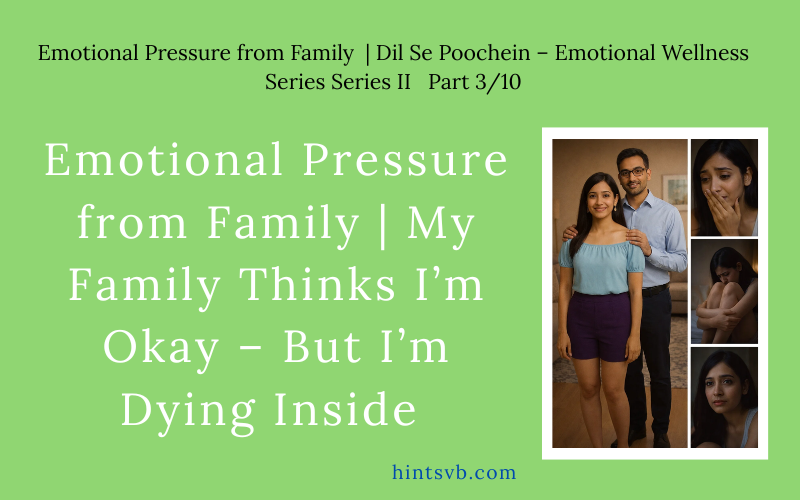
In many homes, the phrase “I’m fine” is spoken casually, almost like a daily ritual. It carries no drama, no visible weight, and no urgent tone. Yet behind those two simple words often hides a silent emotional struggle. Emotional pressure from family doesn’t always come with loud arguments or visible conflicts. Sometimes, it exists quietly, shaping expressions, controlling reactions, and forcing people to wear emotional masks.

Mental health in families is rarely discussed openly. Most conversations stay limited to work, responsibilities, or routine matters. Feelings get buried under expectations. When someone says “I’m fine,” it is usually to maintain peace, not to express truth. The pressure to appear stable becomes part of daily life.
Feeling alone at home is one of the most confusing emotional experiences. Surrounded by people, yet disconnected from emotional understanding, many live with hidden emotional pain. Depression behind smiles becomes normal. Emotional wellness turns into a private struggle rather than a shared concern.
The Dil Se Poochein series often reflects these quiet emotional realities. Emotional pressure from family doesn’t need chaos to exist; silence is enough.
When Family Doesn’t Notice Your Pain
In most households, emotional awareness is not a priority. People notice physical illness faster than emotional discomfort. A fever gets attention. A broken heart does not. Emotional pressure from family builds when feelings are overlooked or minimized.
Mental health in families is often treated as a personal issue rather than a shared responsibility. Silent emotional struggle becomes invisible because no one is looking for it. Everyone assumes things are “normal.” Smiles are mistaken for stability.
Feeling alone at home doesn’t come from isolation but from emotional disconnection. Conversations remain surface-level. Deep emotions stay unspoken. Hidden emotional pain becomes part of everyday life, quietly growing beneath routine interactions.
Family expectations stress individuals in subtle ways. Roles are fixed. Reactions are predictable. There is little space for emotional change. Depression behind smiles becomes easier than explaining feelings that might not be understood.
Emotional wellness is rarely discussed, but emotional burnout quietly develops. The Dil Se Poochein series highlights how emotional pressure from family often goes unnoticed not because families don’t care, but because emotional language is missing.
The Pressure to Stay Strong
Strength is admired in families. Being “strong” is often considered a virtue. But this strength usually means staying silent, managing emotions internally, and not showing vulnerability. Emotional pressure from family grows when emotional expression is replaced with emotional endurance.
Mental health in families is shaped by this idea of strength. Crying is seen as weakness. Emotional confusion is ignored. Silent emotional struggle becomes the expected behaviour.
Feeling alone at home happens when strength becomes a performance rather than a feeling. People smile, function, and fulfill responsibilities while carrying hidden emotional pain inside. Depression behind smiles looks like normal behaviour from the outside.
Family expectations stress individuals to maintain emotional stability even when their inner world feels chaotic. Emotional burnout doesn’t appear suddenly. It builds slowly through unspoken emotions and unacknowledged exhaustion.
Emotional wellness becomes something people pursue privately, if at all. The Dil Se Poochein series reflects how emotional pressure from family often forces individuals to choose silence over expression, strength over honesty, and endurance over relief.
Smiling Outside, Suffering Inside
A smile can hide more than it reveals. Many people master the art of appearing cheerful while experiencing silent emotional struggle. Emotional pressure from family encourages this behaviour, even if unintentionally.

Mental health in families is often measured by outward behaviour. If someone is working, smiling, and fulfilling duties, everything seems “fine.” Hidden emotional pain is rarely questioned. Depression behind smiles blends into daily routines.
Feeling alone at home becomes a quiet reality. People participate in conversations but disconnect emotionally. Their inner struggles remain private, not because they want secrecy, but because expression feels unsafe or unnecessary.
Family expectations stress individuals to maintain emotional normalcy. There is little room for emotional honesty. Emotional burnout grows in silence, unnoticed and unaddressed.
Emotional wellness becomes secondary to social appearance. The Dil Se Poochein series captures this emotional contradiction where people look emotionally stable while quietly carrying emotional pressure from family that shapes their inner world.
Expectations vs Emotional Capacity
Every family has expectations. These expectations define behaviour, responsibilities, and emotional roles. Emotional pressure from family arises when emotional capacity is ignored.
Mental health in families is often overshadowed by performance-based expectations. Success, responsibility, and stability are valued more than emotional comfort. Silent emotional struggle becomes part of daily life.
Feeling alone at home happens when emotional limits are crossed without acknowledgment. People feel exhausted, overwhelmed, and emotionally drained, yet continue functioning. Hidden emotional pain becomes normalized.
Family expectations stress individuals to maintain emotional balance even when they feel emotionally fragile. Depression behind smiles becomes easier than explaining emotional exhaustion.
Emotional burnout is not always visible. It builds quietly through emotional overload and emotional neglect. Emotional wellness remains a personal journey rather than a family conversation.
The Dil Se Poochein series reflects how emotional pressure from family often comes from expectations that ignore emotional capacity, turning emotional endurance into a daily requirement.
Feeling Alone in Your Own House
Home is supposed to feel safe. But emotional safety does not always exist in physical comfort. Emotional pressure from family can make someone feel invisible even while being surrounded by people.
Mental health in families often lacks emotional connection. Conversations focus on tasks, routines, and responsibilities, not emotional experiences. Silent emotional struggle remains unspoken.
Feeling alone at home doesn’t mean isolation; it means emotional distance. People coexist without emotional closeness. Hidden emotional pain becomes part of the background.
Family expectations stress individuals to stay emotionally composed. Emotional expression feels unnecessary or uncomfortable. Depression behind smiles becomes the easiest emotional response.
Emotional burnout develops quietly when emotions remain unacknowledged. Emotional wellness becomes a personal concern, not a shared value.
The Dil Se Poochein series highlights how emotional pressure from family can turn familiar spaces into emotionally distant environments where people feel present but emotionally unseen.
Why We Don’t Speak Up
Silence is not always chosen; sometimes it feels necessary. Emotional pressure from family shapes communication patterns where emotional honesty feels risky or pointless.
Mental health in families is often treated as a personal matter. People hesitate to share emotions, fearing misunderstanding or emotional discomfort. Silent emotional struggle becomes the default.
Feeling alone at home grows when emotional conversations feel rare or awkward. Hidden emotional pain remains private. Depression behind smiles becomes a protective habit.
Family expectations stress individuals to avoid emotional disruption. Emotional expression feels like unnecessary drama. Emotional burnout develops quietly when emotions are suppressed.
Emotional wellness is rarely discussed openly. The Dil Se Poochein series reflects how emotional pressure from family often creates environments where silence feels safer than emotional honesty.
Emotional Burnout: The Silent Damage
Emotional burnout does not announce itself. It arrives slowly, shaped by constant emotional pressure from family and unspoken emotional demands.
Mental health in families often focuses on external stability. Internal emotional exhaustion remains unnoticed. Silent emotional struggle becomes part of daily functioning.
Feeling alone at home intensifies when emotional energy feels drained. Hidden emotional pain grows heavier. Depression behind smiles becomes more frequent.
Family expectations stress individuals to maintain emotional performance. Emotional wellness takes a backseat to responsibility. Emotional burnout becomes normalized.
The Dil Se Poochein series captures how emotional pressure from family contributes to emotional fatigue that feels invisible but deeply impactful.
Small Signs That Go Unnoticed
Emotional distress doesn’t always appear dramatic. It shows up in subtle changes. Emotional pressure from family often prevents these signs from being noticed.
Mental health in families is rarely observed through emotional behaviour. Silence, withdrawal, and emotional distance go unnoticed. Silent emotional struggle continues quietly.
Feeling alone at home becomes more intense when emotional signals are ignored. Hidden emotional pain blends into everyday behaviour. Depression behind smiles remains unchallenged.
Family expectations stress individuals to appear emotionally stable. Emotional burnout becomes part of routine life.
The Dil Se Poochein series highlights how emotional pressure from family allows emotional distress to exist without recognition.
The Weight of Unspoken Feelings
Unspoken emotions carry emotional weight. Emotional pressure from family often makes emotional expression feel unnecessary.
Mental health in families becomes secondary to routine life. Silent emotional struggle continues in the background.
Feeling alone at home becomes emotional reality. Hidden emotional pain remains invisible. Depression behind smiles becomes emotional armour.
Family expectations stress individuals to maintain emotional consistency. Emotional burnout quietly builds.
The Dil Se Poochein series reflects how emotional pressure from family turns emotions into private burdens rather than shared experiences.
Emotional Distance in Familiar Faces
Familiar faces don’t always bring emotional comfort. Emotional pressure from family can create emotional distance even in close relationships.
Mental health in families often lacks emotional depth. Silent emotional struggle becomes routine.
Feeling alone at home grows stronger. Hidden emotional pain becomes normal. Depression behind smiles feels safer than emotional honesty.
Family expectations stress individuals to avoid emotional vulnerability. Emotional burnout continues quietly.
The Dil Se Poochein series shows how emotional pressure from family shapes emotional disconnection in familiar spaces.
Conclusion: Living Quietly With Loud Emotions
Many people live with loud emotions in quiet ways, carrying their feelings silently while appearing calm on the outside. Emotional pressure from family often shapes emotional behaviour without creating visible conflict or dramatic moments. Instead of arguments, there is silence. Instead of expression, there is emotional control. Mental health in families remains a background issue, rarely discussed and often misunderstood. Silent emotional struggle continues unnoticed because everything looks “normal” on the surface.
Feeling alone at home becomes an emotional reality for many individuals who share space but not emotional connection. Hidden emotional pain blends into daily routines, making emotional distance feel ordinary. Depression behind smiles becomes familiar, not because it is accepted, but because it is unseen. Family expectations stress emotional endurance, turning emotional strength into quiet survival. Emotional burnout becomes invisible when exhaustion is hidden behind responsibility. Emotional wellness stays personal, private, and unspoken.
The Dil Se Poochein series reflects this emotional truth clearly: emotional pressure from family doesn’t always look dramatic, but it feels heavy, persistent, and deeply personal.