Focus Theme : Mindset, Gratitude, Positivity
Inner Joy
How to Stay Happy in Difficult Times – A Guide to Lasting Joy
Introduction
Happiness isn’t the absence of problems—it’s the ability to thrive despite them. But how do you keep your joy alive when life keeps testing you?
We’ve all had those days—where everything feels heavy. The bills pile up, relationships get strained, health takes a hit, and the world’s news doesn’t help. In these moments, happiness can seem like a far-off luxury, something reserved for “better times.”

The truth? A happy life isn’t about avoiding storms but learning to dance in the rain.
Research shows that mindset shifts, gratitude practices, and intentional positivity aren’t just nice ideas—they rewire your brain for resilience. Science proves that mindset, gratitude, and positivity can literally change the way your brain responds to adversity. In this guide, we’ll break down how to nurture a happy life in the middle of life’s chaos—without faking smiles or pretending everything’s fine. Because a happy life isn’t an accident; it’s a daily practice.
The Science of Happiness in Adversity
Why Your Brain Defaults to Negativity (And How to Fix It)
Our brains are hardwired to notice threats more than blessings. This “negativity bias” once kept our ancestors alive, but in modern life, it can keep us stuck in cycles of stress and despair.
Chronic stress actually shrinks the prefrontal cortex—the part of the brain that helps you feel joy and make clear decisions. But here’s the hope: Neuroplasticity means your brain can change at any age.
Barbara Fredrickson’s research suggests it takes about five positive thoughts to balance out just one negative one—a powerful 5:1 ratio to remember. This means consciously cultivating positivity matters. Simple ways include practicing gratitude, celebrating small wins, engaging in acts of kindness, savoring joyful moments, and surrounding yourself with uplifting people.
A happy life starts with understanding your brain’s bias toward negativity—and actively working to balance it.
Mindset: The Foundation of Happiness

Our mindset shapes how we interpret life’s events and directly influences our emotional well-being. A positive, flexible perspective can turn challenges into stepping stones, while a rigid, negative outlook can trap us in frustration. By consciously choosing empowering thoughts, we strengthen the foundation of a truly happy life.
Fixed vs. Growth Mindset – Why Struggle Doesn’t Mean Failure
Psychologist Carol Dweck’s research highlights two core approaches: a fixed mindset, where setbacks are seen as signs of inadequacy, and a growth mindset, where struggles are viewed as opportunities to learn. Those with a growth mindset understand that challenges are temporary and often the best teachers. For example, instead of thinking, “This is unbearable,” try reframing it to, “This is my training ground.” This shift opens the door to resilience and creative problem-solving.
The 10-Minute Rule – Contain the Storm
When emotions run high, it’s easy to spiral. The 10-minute rule offers a practical reset: allow yourself exactly ten minutes to vent, cry, or worry. Then, make a conscious pivot—whether to brainstorming solutions, practicing deep breathing, or engaging in something soothing. This prevents negative emotions from hijacking your day.
The Power of “Yet” – A Tiny Word, a Big Shift
Adding the word “yet” to your statements can transform your mindset. Saying, “I’m not happy… yet” implies progress is possible. It turns hopelessness into curiosity and keeps you open to growth.
Your mindset is the lens through which you experience your happy life. Keep that lens clean, and the world becomes brighter, even in challenging times.
Gratitude: The Antidote to Despair
Gratitude is more than a feel-good concept—it’s a proven path to emotional resilience. A Harvard study found that writing down three things you’re grateful for daily can increase happiness by 25% in just three weeks. In a world that often focuses on what’s missing, gratitude shifts attention to what’s already here, creating a richer and more fulfilling life.
Why Gratitude Isn’t Just a Cliché
Gratitude rewires the brain to seek the positive. In India, many families begin their day with a simple “Pranam” to elders or offering prayers at a home temple. These small rituals reinforce thankfulness for life, family, and opportunities.
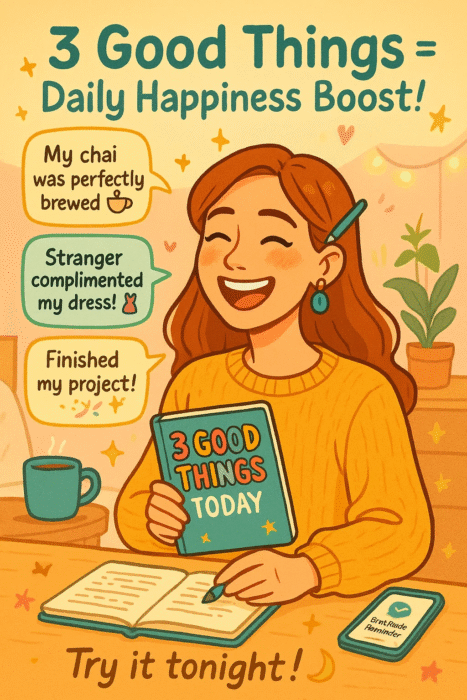
The “3 Good Things” Exercise
Every night before bed, jot down three positive moments from your day. They can be as small as “my chai was perfectly brewed” or “an auto driver returned my dropped wallet.” Over time, this habit trains the mind to notice joy in everyday life.
Gratitude for Small Wins
Celebrate small victories—completing your morning yoga, calling your parents, or even getting a good bargain at the local bazaar. These moments, though tiny, compound into lasting happiness.
When Gratitude Feels Impossible
During tough times, try the “Thank You, Next” approach: acknowledge the struggle, thank it for its lesson, and consciously move forward. For example, a failed job interview might still have taught you better preparation skills or introduced you to a new mentor.
Gratitude turns what we have into enough—and what we imagine into possible, making it a daily anchor for a truly happy life.
Positivity: More Than Just Smiling
Positivity is not about forcing a smile when your heart feels heavy. It’s about choosing perspectives that give you strength without ignoring reality. Toxic positivity says, “Just be happy!”—which can dismiss genuine pain. Healthy optimism, on the other hand, says, “This hurts, but I’ve survived worse.” It’s the art of acknowledging challenges while still believing in the possibility of better days.
Healthy optimism is defiance against despair, not denial of it. You can build it through small, consistent actions. Music therapy—curating upbeat playlists—can lower stress hormones and lift your mood in minutes. Social fuel—spending at least 15 minutes daily with someone who uplifts you—reminds you that joy is contagious. Even taking a short walk under the morning sun can reset your emotional tone.
Positivity is like a muscle—the more you train it through intentional choices, the stronger and more natural it becomes.
Practical Toolkit for Tough Days
Even the most positive people face heavy days. Having a go-to plan can help you bounce back faster and protect your happy life. Try these simple yet powerful tools:
5-Minute Mood Boosters
- Humming: Activates the vagus nerve, calming your body and reducing stress.
- Alphabet Game: Name things you love from A to Z—chai, beaches, mangoes, yoga… the list will make you smile.
Long-Term Habits
- Morning Sunlight: Just 10 minutes outdoors can regulate serotonin and keep your mood stable.
- “No News Before Noon” Rule: Protects your mind from early negativity so you can focus on a happy life.
Emergency Happiness Kit
- Keep dark chocolate, a folder of saved memes, and a friend’s number on speed dial.
- These small comforts remind you that joy is always within reach.
Your happy life is built one intentional choice at a time.
Conclusion
Happiness during difficult times is not a random stroke of luck—it’s a skill you nurture every single day. A truly happy life is built on small, consistent actions that strengthen your emotional resilience. It means giving yourself permission to feel the pain, process it, and acknowledge that life isn’t always perfect. At the same time, it’s about making a conscious choice to look for moments of light, however small they may be.
Simple acts can be powerful. Tonight, text a friend: “What’s one tiny joy you had today?” You might share a laugh over a silly memory, swap uplifting stories, or simply feel comforted by connection. This habit creates a ripple effect of positivity and gratitude in your relationships.
Remember, a happy life is not something you stumble upon—it’s something you intentionally build, one resilient thought at a time. Every challenge you face can become a stepping stone toward greater strength, deeper gratitude, and renewed hope. The key is to keep showing up for yourself daily, with compassion and optimism. When you pair emotional honesty with purposeful joy, you create a life that not only weathers storms but also dances in the rain.
Leave a Reply