Category: HintVaani

  • Women Empowerment    Series II Part 10 of 20             Social Impact & Activism                  
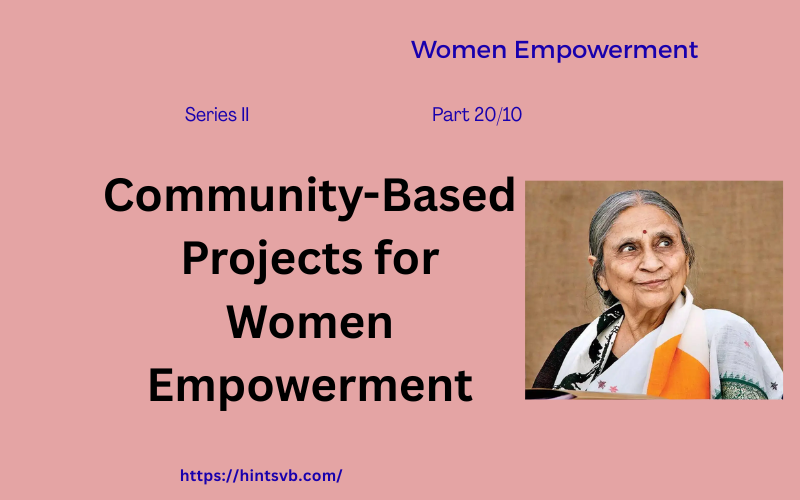
    Women Empowerment Series II Part 10 of 20 Social Impact & Activism                  

    Community-Based Projects for Women Empowerment

    Introduction — Why Community-Driven Models Matter in Women Empowerment

    True empowerment begins when a woman’s growth uplifts not just her, but her entire community. Across India and the world, community-driven initiatives have proven that progress becomes sustainable only when it is shared. Community-Based Projects for Women Empowerment are powerful examples of this truth — they focus on collective participation, shared responsibility, and mutual progress rather than isolated success stories.

    Community-Based Projects for Women Empowerment

    Unlike top-down programs, these projects are built on local wisdom, trust, and collaboration. They connect education, health, finance, and leadership — transforming social structures from the grassroots. Through these models, women evolve from beneficiaries into changemakers, capable of shaping their own destinies.

    A community-driven approach in women empowerment through community work strengthens social bonds while addressing real challenges like unemployment, gender bias, and lack of education. It redefines leadership — showing that empowerment isn’t about individual rise, but collective growth.

    When a woman learns to earn, speak, or lead — her strength multiplies through every home and every child she touches. That’s why Community-Based Projects for Women Empowerment are not just social initiatives; they are movements of resilience, equality, and hope.

    What Are Community-Based Projects for Women Empowerment?

    At their core, Community-Based Projects for Women Empowerment are locally driven initiatives that focus on enabling women to become active agents of change within their own communities. Unlike top-down interventions, these projects are designed, managed, and implemented with local participation — ensuring that the solutions truly reflect the lived realities of women. They integrate education, micro-finance, health awareness, leadership training, and self-help group (SHG) models into a unified ecosystem that nurtures both personal growth and collective resilience.

    The essence of these projects lies in participation and ownership. Women are not treated as beneficiaries but as co-creators of development. This participatory approach builds confidence, decision-making ability, and long-term accountability. Whether it’s a rural SHG in Odisha, a digital literacy drive in Haryana, or a sustainable craft enterprise in Rajasthan, every initiative is rooted in the cultural, social, and economic identity of the community it serves.

    A well-structured Community-Based Project for Women Empowerment usually includes several interconnected dimensions:

    1. Capacity Building: Providing women with skill development programs, vocational training, and digital literacy courses so they can become self-reliant and competitive in local and global markets.
    2. Financial Inclusion: Facilitating access to microloans, savings groups, cooperative banks, and financial literacy programs. When women gain control over finances, they gain control over their choices.
    3. Health and Well-being: Conducting awareness sessions on nutrition, sanitation, menstrual hygiene, and maternal health — ensuring that physical wellness supports social empowerment.
    4. Leadership Development: Encouraging women to take up leadership roles in panchayats, community committees, or local governance structures, thereby ensuring representation in decision-making.
    5. Social Awareness: Initiating dialogues on gender equality, domestic violence, early marriage, and education — empowering women to challenge long-standing social barriers.

    Each of these dimensions supports and strengthens the others, creating a cycle of empowerment that sustains itself. As one woman gains confidence, she inspires another. As one community learns self-sufficiency, it becomes a model for others to follow. This ripple effect ensures that the empowerment achieved is not fleeting but deeply rooted and generational.

    These projects also foster women-led community development, where leadership arises organically from within. A woman who once hesitated to speak in public becomes the voice that drives collective action. Such transformation — from silence to strength — is the true essence of empowerment.

    In essence, Community-Based Projects for Women Empowerment are not about charity or temporary aid. They are about creating ecosystems of independence, dignity, and shared progress. They remind us that sustainable change begins not from outside interventions but from communities where women stand tall — informed, inspired, and in charge of their own destinies.

    Successful Examples of Grassroots Initiatives in India

    India’s story of empowerment is written through countless grassroots women empowerment initiatives. From rural villages to urban slums, women have organized themselves into collectives that are reshaping local economies and mindsets.

    1. Self-Help Groups (SHGs) – The Backbone of Rural Women Empowerment Projects

    Over 70 million Indian women are part of SHGs today. These small collectives began as savings groups, but soon evolved into micro-business units that fund education, healthcare, and livelihoods. Through rural women empowerment projects, members learn financial discipline, negotiation skills, and leadership.

    In Tamil Nadu, SHGs under the Tamil Nadu Corporation for Development of Women have enabled thousands to start small enterprises — from tailoring to food processing. Similarly, in Maharashtra, Mahila Arthik Vikas Mahamandal (MAVIM) has become a model for linking SHGs with government schemes and private markets.

    2. Kudumbashree, Kerala – A Statewide Model of Women-Led Community Development

    Started in 1998, Kudumbashree (meaning “prosperity of the family”) is one of the world’s largest women empowerment movements. It operates through neighborhood groups that blend microfinance, social reform, and entrepreneurship. Members manage catering units, eco-tourism projects, and even IT centers.

    The program has made Kerala a living example of community-based projects for women empowerment — where women not only earn but also lead local governance decisions.

    3. SEWA – Self-Employed Women’s Association, Gujarat

    Community-Based Projects for Women Empowerment
    Renowned lawyer and women empowerment activist and Padma Bhushan winner Ela Bhatt

    Founded by Ela Bhatt, SEWA is a pioneer in women empowerment through community work. It began by organizing self-employed women workers — street vendors, artisans, domestic workers — into cooperatives. Today, SEWA has millions of members who collectively run credit cooperatives, health programs, and social security systems.

    This grassroots model blends economic empowerment with dignity and identity. It shows how social impact projects for women can thrive when built on trust and participation.

    4. Digital Sakhi by CSR Foundations

    In states like Madhya Pradesh and Maharashtra, programs like Digital Sakhi train rural women in financial and digital literacy. These women then become digital ambassadors — teaching others how to use smartphones, online banking, and e-commerce.

    This approach merges technology with tradition, ensuring that even remote villages participate in the digital economy. It’s a modern evolution of community-based projects for women empowerment, tailored to the 21st century.

    5. Local NGOs and Faith-Based Groups

    From Pradan and Barefoot College to smaller NGOs in Panipat, Haryana — localized initiatives continue to build women-led community development through small but consistent efforts. These organizations provide platforms for learning, leadership, and livelihood — rooted deeply in local realities.

    Each story proves a simple truth: when empowerment begins at the community level, its impact becomes unstoppable.

    How Women-Led Communities Create Sustainable Change

    Empowerment sustains only when it’s shared. Women-led community development achieves this by building circles of trust and accountability. When women lead, they bring empathy, collaboration, and inclusiveness to every decision — values essential for long-term impact.

    Here’s how Community-Based Projects for Women Empowerment ensure sustainability:

    1. Ownership Over Dependency

    Women who lead their projects take pride in ownership. They don’t wait for external funds or direction. They identify local issues and solve them collectively — whether it’s building a school, managing a microcredit fund, or setting up solar panels.

    2. Generational Change

    Grassroots women empowerment initiatives don’t just transform today’s women — they shape the next generation. Daughters of empowered mothers are more likely to stay in school, pursue careers, and marry later. This intergenerational cycle of empowerment multiplies the impact manifold.

    3. Local Leadership and Policy Influence

    When communities see the impact of women-led groups, local governance evolves. Many SHG members now serve as panchayat representatives, directly influencing policy. This alignment between community action and public policy strengthens social impact projects for women at every level.

    4. Economic and Environmental Sustainability

    Women are natural stewards of resources. In many rural women empowerment projects, women manage organic farming, water conservation, and waste recycling programs — combining livelihood with ecological care.

    Their initiatives remind us that empowerment is not just about income — it’s about sustainability, dignity, and harmony with nature.

    5. Emotional and Social Cohesion

    Unlike hierarchical programs, community-based projects for women empowerment foster emotional connection. Women find mentorship, friendship, and healing through shared challenges. This sense of belonging builds resilience — especially in times of crisis.

    In every case, sustainability grows not from external funding but from internal solidarity.

    Ways to Support or Start a Community-Based Project

    Supporting or starting Community-Based Projects for Women Empowerment doesn’t always require huge investments or government grants. True change begins with intent, empathy, and collaboration. Whether you’re an individual looking to contribute, an NGO designing grassroots women empowerment initiatives, or a corporate CSR arm seeking social impact, there are many meaningful ways to participate. Empowerment is not about doing something for women—it’s about creating environments where women can lead and thrive with their communities.

    1. Start with Listening

    The first step in community work is not planning, but listening. Before designing any initiative, understand the community’s heartbeat. Spend time with the women you aim to empower—hear their stories, struggles, and aspirations. Ask what they need, not what others think they need. Real grassroots women empowerment initiatives begin with empathy and mutual respect. Listening builds trust, and trust is the foundation on which sustainable social impact projects for women are built.

    2. Identify Local Strengths

    Every community holds a wealth of untapped potential—skilled artisans, self-taught healers, passionate teachers, or natural leaders waiting for a platform. Women empowerment through community work often begins by recognizing and amplifying these local talents. Instead of imposing external solutions, focus on nurturing what already exists. When women collaborate to revive traditional crafts, run local cooperatives, or start literacy groups, they rediscover their strength and self-worth. Empowerment, in its purest form, means unlocking potential that was always there.

    3. Build Partnerships for Impact

    No change happens in isolation. Effective community-based projects for women empowerment thrive on collaboration. Partner with NGOs, self-help groups, local panchayats, and government departments. Multi-stakeholder involvement ensures continuity and scalability. When public and private sectors align with community leadership, the impact expands exponentially. Partnerships also bring diverse expertise—training, funding, and visibility—that helps grassroots movements evolve into sustainable women-led community development models.

    4. Focus on Education and Skills

    Education is the foundation of all empowerment. Whether it’s digital literacy, language training, or vocational skills, knowledge equips women to participate confidently in both economic and social spheres. Introduce capacity-building programs that help women think critically, solve problems, and lead effectively. Rural women empowerment projects that focus on practical skill development—like tailoring, computer training, or financial management—transform households into self-sufficient units. When a woman learns, a family grows; when a community learns, a nation progresses.

    5. Create Access to Finance

    Empowerment without economic inclusion remains incomplete. Link women to microfinance institutions, cooperative societies, or digital payment systems. Encourage them to open bank accounts, join savings groups, or explore micro-entrepreneurship. Financial independence is not just about earning—it’s about decision-making power. Women-led community development flourishes when women manage their finances with confidence and transparency. Access to credit, even in small amounts, creates ripples of resilience and hope.

    6. Document and Share Success Stories

    Stories inspire change. Document every milestone—big or small. Use blogs, social media, and community events to share examples of social impact projects for women that made a difference. Visibility not only brings recognition but also encourages replication. When one community sees another’s success, motivation spreads faster than money ever could. The voice of one empowered woman becomes the echo that awakens hundreds more.

    7. Stay Patient and Consistent

    Community transformation is not an overnight event—it’s a slow, beautiful process. Change grows season by season, through persistence and collective faith. There will be resistance, setbacks, and fatigue—but consistency builds credibility. Stay committed, celebrate small wins, and keep showing up. Because the steps you take today, however small, will become movements tomorrow.

    When individuals and organizations align with shared purpose, Community-Based Projects for Women Empowerment evolve into living examples of progress that sustains itself. These aren’t just programs—they’re blueprints of hope, showing that when a woman rises, her entire community rises with her.

    Conclusion — Empowering One Woman Can Uplift an Entire Community

    Empowerment is not an individual triumph — it’s a shared awakening. Community-Based Projects for Women Empowerment remind us that every empowered woman is a pillar of her community’s progress. Her courage sparks confidence in others, her success inspires participation, and her voice amplifies justice.

    In villages and cities alike, women empowerment through community work has proven that social transformation doesn’t always need grand speeches — it needs consistent, compassionate action. Each project, however small, weaves a larger story of dignity and equality.

    When a woman gains control over her choices, income, and voice — her family prospers, her children learn freedom, and her community thrives. That is the quiet revolution of grassroots women empowerment initiatives — change that begins in one home but echoes across generations.

    As India and the world move toward inclusive growth, the lesson is clear: empower locally to impact globally.
    Every time a woman leads a project, she doesn’t just change her world — she redefines what empowerment truly means.

    Empowering one woman uplifts ten others. Empowering a community uplifts humanity itself. 🌸

  • Building a Gratitude Mindset Happy Life Inner Joy              Series III Part 9 of 10

    Building a Gratitude Mindset Happy Life Inner Joy Series III Part 9 of 10

    Happiness Is a Daily Practice, Not a Destination | Building a Gratitude Mindset

    Introduction — Why a Gratitude Mindset Changes Everything

    Most people chase happiness as if it’s a destination waiting at the end of success — a dream job, a relationship, a new house, or a higher bank balance. Yet every time one milestone is achieved, another quickly takes its place. This endless pursuit keeps us moving but rarely fulfilled.

    True contentment begins only when we stop chasing and start practicing awareness. That conscious practice is called a gratitude mindset.

    Gratitude Mindset

    A gratitude mindset teaches that joy doesn’t come from reaching outcomes but from recognizing moments — the quiet sunrise, a kind word, a shared smile, or simply good health. It’s about shifting focus from what’s lacking to what’s already abundant.

    When you cultivate this habit daily, happiness transforms from a goal into a rhythm — a way of being that flows naturally through appreciation, calmness, and purpose.

    The Myth of “Arriving” at Happiness

    Society often conditions us to believe that happiness is something we “reach” after a series of achievements — a successful career, a perfect relationship, or a certain lifestyle. From childhood, we’re told that joy is the reward for performance. But even after reaching these milestones, many people still feel an emptiness they can’t explain. Why? Because external wins feed pride, not peace.

    A gratitude mindset breaks this illusion. It shifts the focus from “having more” to “being more.” Every ordinary day already holds countless small victories — breathing deeply, learning something new, caring for others, or simply showing up despite challenges.

    When we start acknowledging these moments, gratitude quietly replaces comparison with contentment. The question changes from “What’s missing in my life?” to “What’s already working beautifully?”

    This inner shift frees you from the exhausting chase of validation. Happiness, then, becomes sustainable — not because life is perfect, but because your mindset is peaceful enough to recognize perfection in the imperfect.

    Understanding the Gratitude Mindset

    A gratitude mindset isn’t about polite gestures—it’s a worldview that interprets every experience, good or bad, as a teacher.

    • Lost a client? You learned resilience.
    • Missed an opportunity? You discovered patience.
    • Celebrated success? You practiced humility.

    Gratitude transforms perception. Positivity becomes your default lens.
    This mindset doesn’t ignore pain; it balances it with perspective.
    Each morning, a person with this approach asks, “What can I appreciate today?” rather than “What might go wrong?”

    Psychologists confirm that those who practice daily gratitude journaling experience lower anxiety, better sleep, and stronger relationships. The science simply proves what ancient wisdom already knew: gratitude equals emotional wealth.

    The Neuroscience Behind Gratitude and Positivity

    Our brains are wired to detect threats—a survival mechanism that magnifies negativity. Practicing gratitude retrains this wiring. When you write or speak words of appreciation, the brain releases dopamine and serotonin—the same “feel-good” chemicals triggered by success or love.

    Developing a gratitude mindset literally rewires neural pathways. Repeated acts of thankfulness carve new patterns of positive thinking, replacing habitual worry. Over time, positivity becomes automatic.

    Neuroscientists call this neuroplasticity—the brain’s ability to change itself. Through daily happiness habits, we can build emotional muscle just as exercise builds the body.

    Gratitude Mindset in Everyday Life

    1. Morning awareness: Before touching your phone, list three things you appreciate.
    2. Mindful meals: Pause before eating; thank everyone in the chain who made your food possible.
    3. Evening reflection: Write one moment that made you smile today.

    These simple rituals reinforce the gratitude mindset. They turn routine into ritual.
    Even five minutes of reflection each day can transform emotional tone from restless to peaceful.
    Positivity doesn’t demand perfection—it demands practice.

    From Gratitude to Growth Mindset

    A gratitude mindset naturally nurtures a growth mindset. When we learn to appreciate our efforts rather than constantly judge outcomes, we create space for genuine learning and self-compassion. Growth doesn’t flourish in fear or comparison — it thrives where encouragement and understanding exist.

    Gratitude helps us view mistakes as lessons instead of failures. It replaces self-criticism with curiosity: What did this experience teach me? This shift strengthens emotional resilience and fuels motivation to keep improving.

    Leaders who practice gratitude build stronger, more loyal teams, because appreciation inspires far more than pressure ever can. Parents who model gratitude raise children who believe in progress, not perfection. In both roles, acknowledgment becomes the foundation of confidence.

    Gratitude expands the mind’s horizon. It reminds us that every challenge carries an opportunity, and every setback hides a seed of growth. When we train ourselves to notice what’s good, we don’t just find peace — we create momentum for greatness..

    The Role of Positive Thinking and Daily Happiness Habits

    Positive thinking is not about ignoring problems—it’s about framing them with perspective.
    A gratitude mindset uses optimism realistically; it finds meaning even inside difficulty.

    Daily happiness habits like journaling, mindful breathing, or expressing appreciation anchor this positivity. They shift your emotional rhythm from reaction to intention.

    Examples:

    • Replace morning scrolling with deep breathing and a gratitude list.
    • Compliment one person daily.
    • Thank yourself for small acts of discipline.

    These small habits strengthen emotional immunity, transforming fleeting joy into steady calm.

    Gratitude Mindset in Relationships

    In relationships, appreciation is oxygen.
    When partners, friends, or colleagues acknowledge each other sincerely, trust grows.
    A gratitude mindset turns relationships from transactions into transformations.

    Instead of focusing on what others didn’t do, focus on what they tried to do.
    Instead of repeating flaws, repeat compliments.

    Research shows couples who express daily gratitude report 25% greater satisfaction.
    The next time tension arises, pause and say, “Thank you for trying.” That phrase alone resets emotional tone and revives positivity.

    Gratitude Mindset at Work

    Workplaces thrive on recognition. Employees leave managers, not jobs.
    When leaders demonstrate a gratitude mindset, productivity rises and burnout falls.

    Start meetings with appreciation. End projects with acknowledgment.
    Encourage peer recognition.
    Each act of gratitude builds belonging.

    Organizations that practice gratitude and positivity nurture innovation and loyalty.
    Even self-employed individuals can apply this: thank your clients, appreciate feedback, and celebrate milestones.
    Happiness at work isn’t gifted—it’s practiced.

    Overcoming Negativity Bias Through Gratitude Mindset

    Human minds cling to criticism more than compliments.
    To counter this bias, consciously record positive events.
    For every complaint, list three blessings.

    When anger rises, pause and ask, “What could this situation be teaching me?”
    This small question is the essence of a gratitude mindset—it dissolves blame and invites learning.

    Negativity may visit, but gratitude decides how long it stays.

    Spiritual Dimension of Gratitude Mindset

    Almost every spiritual path—from the Bhagavad Gita to Stoic philosophy—centers on appreciation.
    A gratitude mindset aligns with the law of abundance: what we appreciate expands.

    When we thank the universe for lessons instead of lamenting losses, energy shifts.
    Gratitude opens the heart; complaint closes it.
    Positivity becomes prayer in motion.

    Through this lens, happiness isn’t something we pursue—it’s something we permit.

    Building a Family Culture of Gratitude Mindset

    Children learn by observation, not instruction.
    When they see parents practicing gratitude, they absorb optimism naturally.
    Simple rituals—like sharing “one good thing” at dinner—cultivate empathy and confidence.

    Make daily happiness habits part of family rhythm:

    • Gratitude jar: everyone adds one thankful note daily.
    • Weekend reflection: one lesson learned each week.

    Such practices turn appreciation into legacy.

    Community Impact of Gratitude Mindset

    Communities rooted in appreciation resolve conflict faster and cooperate better.
    When citizens thank public workers, teachers, or volunteers, morale improves.
    A collective gratitude mindset transforms culture from complaint to contribution.

    Imagine cities where appreciation posts trend more than outrage.
    That’s the power of shared positivity—it scales kindness.

    Obstacles to Practicing Gratitude Mindset

    Practicing gratitude may sound simple, but it isn’t always easy. Modern life constantly pulls our attention toward stress, comparison, and endless digital noise. Overexposure to negativity—whether through media or our own thoughts—gradually drains emotional energy and clouds perception.

    Yet, these very moments test the strength of a gratitude mindset. When comparison arises, counter it with compassion; remind yourself that everyone is walking their own path. When frustration builds, pause and breathe before reacting.

    Perfection isn’t required—presence is. Gratitude doesn’t erase challenges; it helps you meet them with balance and clarity. Even a single sincere moment of thankfulness can reset your emotional compass toward positivity, proving that awareness, not circumstance, determines peace.

    Scientific Evidence Supporting Gratitude Mindset

    Harvard Medical School’s research on positive psychology shows that people who keep weekly gratitude journals feel 25% happier after ten weeks.
    The University of California found gratitude reduces stress hormones by 23%.
    These findings validate the truth: a gratitude mindset isn’t philosophy—it’s proven psychology.

    Through repeated daily acts, neural circuits of positive thinking strengthen while anxiety pathways weaken.

    From Gratitude Mindset to Purposeful Living

    Gratitude Mindset

    A gratitude mindset naturally evolves into purposeful living. When you start appreciating life—not just for its highs but for its lessons—you develop an inner desire to serve it meaningfully. Gratitude softens ambition into compassion and turns awareness into action.

    You begin noticing opportunities everywhere—to help someone learn, to guide someone lost, or simply to listen without judgment. Service becomes an expression of joy rather than obligation. Through small acts of kindness, daily happiness habits transform into collective progress.

    Purpose no longer feels like a distant mission; it becomes woven into everyday gestures—sharing knowledge, protecting nature, or uplifting a struggling soul. You stop asking, “What do I get?” and start asking, “What can I give?”

    And the paradox is beautiful: the more you give, the more complete you feel. Gratitude teaches that contribution, not consumption, is the truest form of fulfilment.

    How to Sustain the Gratitude Mindset

    1. Journal three good things daily.
    2. Reflect weekly on lessons from challenges.
    3. Express gratitude aloud—to people, not paper.
    4. Meditate five minutes focusing on breath and appreciation.
    5. Review progress monthly; celebrate consistency, not perfection.

    Consistency builds confidence; confidence builds calm; calm builds happiness.
    That’s the architecture of a steady gratitude mindset.

    Integrating Gratitude Mindset with Technology

    Use tech wisely:

    • Gratitude reminder apps prompt reflection.
    • Online communities share appreciation posts.
    • Digital detox hours protect mental peace.

    Technology, when guided by gratitude, becomes a tool for awareness, not distraction.

    The Ripple Effect of Gratitude Mindset

    Gratitude Mindset

    Every act of gratitude inspires another.
    Say “thank you” sincerely, and someone else passes it forward.
    This chain reaction turns isolated positivity into collective evolution.

    That’s how the gratitude mindset scales from self to society.
    It’s not about perfection—it’s about participation.

    Common Misconceptions

    • Myth 1: Gratitude means ignoring pain.
      Reality: It means seeing beyond pain.
    • Myth 2: You need big reasons to be thankful.
      Reality: Small joys matter most.
    • Myth 3: Gratitude is temporary motivation.
      Reality: It’s lifelong discipline.

    Understanding these truths protects your mindset from cynicism.

    Conclusion — Happiness as a Practice, Not a Prize

    Happiness isn’t something you chase or capture; it’s something you consciously create, nurture, and renew each day through a gratitude mindset. It’s not a trophy for success—it’s a reflection of how you choose to see the world around you.

    When you live with this awareness, even the most ordinary moments feel sacred. A morning walk, a shared smile, a small act of kindness—each becomes a quiet celebration of life. Positivity begins to flow naturally, and comparison slowly fades into acceptance.

    Your energy becomes calmer, your words kinder, and your relationships deeper. Life stops feeling like a race and starts feeling like a rhythm of peace.

    Every sunrise offers a chance to begin again—with appreciation instead of expectation. Practice gratitude mindset daily, and happiness will no longer stay ahead of you—it will walk beside you, silently reminding you that joy was never far away; it was always within you.