
Finance & Independence
Nourish Your Wallet: How Financial Literacy Fuels Women’s Empowerment
Introduction
“Money isn’t just currency—it’s choice. Yet, 56% of women globally lack confidence in managing finances. What if financial literacy could rewrite your future?”
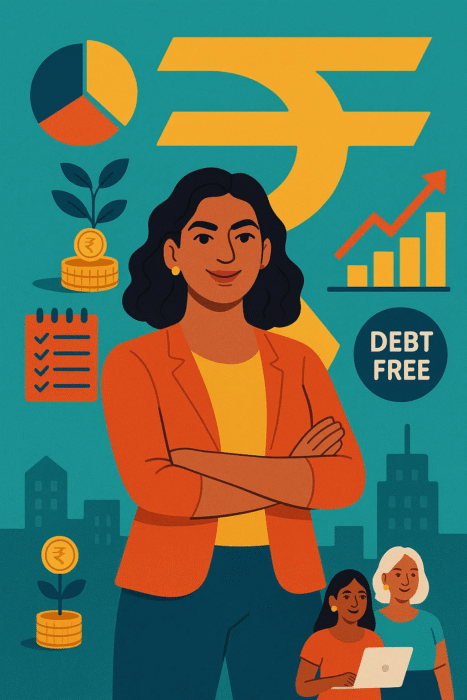
Women empowerment begins when finance & independence are in your hands. It’s not just about earning more—it’s about understanding where every rupee goes, how it grows, and how it protects you in uncertain times.
For too long, money talk has been treated as a male domain. Families, media, and even workplace cultures subtly tell women: “Leave it to the men.” But breaking the taboo around discussing money is feminist—it’s a step toward rewriting generational patterns.
When you know how to budget, invest, and plan for retirement, you’re not just securing your own future—you’re setting a blueprint for your family, community, and the women who come after you. Financial knowledge builds independence, security, and leadership. It gives you the power to walk away from toxic workplaces, unsafe relationships, and limiting opportunities.
Money decisions aren’t just about numbers—they’re about dignity, freedom, and choice. The moment you take ownership of your finances, you stop waiting for permission to dream big.
The Gender Gap in Financial Literacy
Why Women Are Left Behind—And How to Catch Up
The gender gap in financial literacy is real, and it’s costing women their independence.
The numbers are stark:
- Only 30% of women invest compared to 50% of men (Global Financial Literacy Excellence Center).
- 80% of women defer major financial decisions to their spouses (McKinsey).
Why does this happen?
- Cultural Norms: In many households, it’s assumed men “handle the money.”
- Representation Gap: The finance industry remains male-dominated, making women feel excluded.
- Education Access: Financial literacy is rarely taught in schools, and when it is, examples often fail to connect with women’s realities.
Closing the gender gap in finance is key to women’s empowerment. This doesn’t mean women are bad with money—it means systems haven’t encouraged their participation.
The first step is awareness. Once women see the data and realize they’re not alone, they can start building skills and networks to take control of their financial future.
Pillars of Financial Independence
1. Budgeting Like a Boss
Financial empowerment starts with knowing where every rupee goes. The 50/30/20 Rule is a simple, time-tested formula:
- 50% for needs – rent, groceries, utilities, medical bills.
- 30% for wants – travel, shopping, hobbies.
- 20% for savings and investments – building future security.
Apps like Mint or YNAB (You Need A Budget) make it easier to track your spending visually. Budgeting is not about cutting joy from your life—it’s about giving every rupee a job. When your money works for you, you stay in control, not the other way around.
2. Investing 101: Making Money Work for You

Investing isn’t just for the rich or finance experts. Start small—even ₹500 a month in an index fund (like S&P 500 ETFs) or a Systematic Investment Plan (SIP) can grow significantly over time through the power of compounding.
Case Study: A school teacher invested ₹5,000 per month in mutual funds for 20 years. Without any high-risk speculation, her portfolio grew to ₹1 crore—all thanks to discipline and patience.
For beginners, micro-investing apps like Acorns invest spare change from your daily purchases. It’s almost effortless yet builds wealth quietly in the background.
3. Debt Management: Breaking Free
Debt is a silent dream-killer. The longer it lingers, the harder financial independence becomes. Two powerful repayment strategies are:
- Snowball Method: Clear the smallest debt first to gain motivation and momentum.
- Avalanche Method: Pay off the highest interest debt first to save money in the long run.
You can also negotiate interest rates with lenders or consolidate loans into a single, lower-interest payment. Every small victory over debt brings you closer to true financial freedom.
Finance and independence grow when women own their financial narratives. Budget smart, invest early, and crush debt with strategy. Every decision you make today plants the seeds for tomorrow’s freedom.
Overcoming Psychological Barriers
From ‘I’m Bad With Money’ to ‘I Invest’
Many women shy away from finances due to self-doubt or fear. Common thoughts like “I don’t earn enough to save” hold them back. The truth? You can begin with as little as ₹500 a month and still build meaningful wealth over time.
Another myth is “Investing is gambling.” In reality, long-term, disciplined investing—especially in diversified assets—is far safer than letting cash lose value to inflation.
A powerful starting point is the 1% Challenge: Increase your savings by just 1% each month. Over a year, you’ll hardly feel the difference, but your account will.
Imposter syndrome doesn’t vanish overnight, but it weakens with every step you take. Just like money, knowledge compounds. The more you learn and act, the more confident you become. Remember—financial courage grows through action, not perfection.
Policy & Community Solutions
Changing Systems, Changing Lives
Financial empowerment isn’t just personal—it’s systemic.
Workplace Advocacy:
- Host salary negotiation workshops.
- Push for employer-matched retirement plans.
Grassroots Movements:

- Kenya’s Women in Finance networks help rural women start savings groups.
- India’s SEWA Bank offers micro-loans and training for low-income women.
“Teach a woman to budget, and she empowers a generation.”
Conclusion
Financial literacy is not a luxury—it’s liberation.
When women take control of their finances, they take control of their future. From building savings to negotiating a pay raise, every rupee invested in your skills and goals matters.
Even small actions—like starting a ₹500 SIP, tracking expenses, or paying off one debt—are powerful. These steps are more than numbers; they are statements of independence, dignity, and freedom.
True women empowerment begins with financial courage. Learn the terms, break the silence, and own your money story. Your wallet is more than a place to store cash—it’s your voice in the world. Make it speak with strength.
Today, open that investment account. Share this with a woman who needs the nudge. Together, let’s create a generation of financially confident women.
Leave a Reply